Whilst caught up in the loop of doomscrolling on Instagram, I came across an interesting reel posted by a woman who was walking through the rooms of the Rose Wylie’s exhibition at the Royal Academy; expressing her discontent with the artist’s painting, and arguing that £21 is too much of a price for this ‘crap’. She compared it multiple times to Flemish 17th century paintings and argued that even if they might not be to everyone’s taste, they would be recognised as art.
This short video flags something that history of art and public perception has struggled to overcome: the idea that some artworks are more real and legitimate than others. We may have abandoned the academic hierarchy that placed history painting above landscape, socially grown to accept and canonise abstraction, conceptual art, and everything that followed in the 20th century; but the idea that realism constitutes a standard of quality that has not disappeared. To prove this, I urge you to think of the last time when you heard “this is not art” in front of Rembrandt or Poussin.
It is important to understand where such hierarchies stem from. During the 17th century, the French Royal Academy explicitly categorised scenes drawn from mythology, scripture, and classical antiquity as being ‘the summit of the art’ for how they engaged with the highest human concerns such as heroism and divine will. Portraiture, landscape, genre painting, and still life were considered inferior as their content seemed to be purely decorative, lacking intellectualism.
All provocations of the Impressionists and later Cubists, Dadaists and Abstract Expressionists were presented to challenge the definition of art, to inspire answers to questions such as “what is art?” and “is this art?” Their persistent subversion to the norm inevitably garnered institutional acceptance, becoming part of the art historical canon. Western institutions started to accept innovation and conceptual rigour regardless of how abstract certain artworks were; they promoted mental engagement with an audience attempting to digest what these artworks meant. In some ways it created a new hierarchy: art started to be divided not by genres, but by legibility and stimulus of mental engagement.
As people, we are extremely sensitive to receiving visual information that corresponds to lived experience; if an artwork resembles something, someone, some feeling we recognise, then it inspires a level of engagement with the work. However, if someone is presented with a piece that doesn’t seem to engage with their reality, then the ability to understand it as an artwork can become clouded alongside their definition of ‘art.’
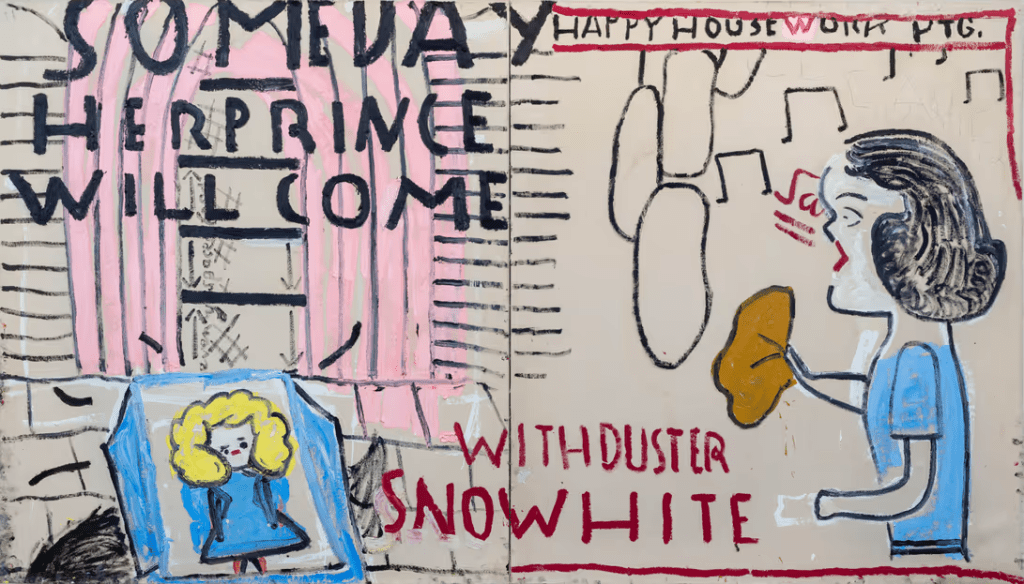
For this reason, Rose Wylie is often misread. Wylie, who did not achieve widespread recognition until her late seventies, paints on a large scale; her artistic practice draws on memory, film broadcasts, and overhead conversations that happened a long time ago. Her figures and environments are flattened and abbreviated, her brushwork and technique are not concerned with technicalities. None of this comes from the lack of skill. Wylie studied at the Royal College of Art, and the apparent ‘artlessness’ and nativity is actually the product of resistance to what painting can become if it prioritises technical sophistication over feeling. Her large pieces draw on vernacular and popular subjects, rendered in a simple visual language, suggest that ordinary experiences are just as valid as religious or historical themes. In this way, if you stand in front of her work and feel no sense of wonder, or grandeur, or anything at all, you face a painting that refuses to operate through the visual language that could be easily understood and recognised, making you uncomfortable and trying to engage in the dialogue.
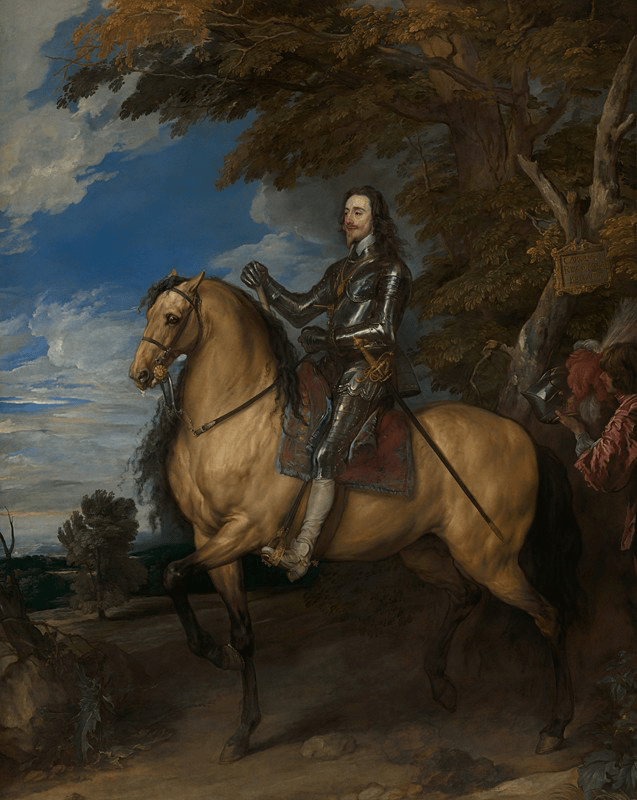
The creator behind the video expected the art to declare itself, just as Flemish artists did though the specific visual signs read as a marker of naturalness. This clarity, however, is historical and not natural; those paintings annoyed untrained eyes just as Wylie’s paintings do today. In the 21st century the hierarchy of styles has replaced the hierarchy of genres and still rewards art that signals its authority through the well known visual codes. Yet, it struggles with works that locate their value in the feeling, in the personal visual world, and refusal to follow a pre-existent pattern.
By diminishing Wylie’s exhibition to nothing but ‘crap’, the woman from the video has already lost something more valuable than £21. You can spend a fortune on Flemish 17th century paintings and babble about their aesthetic value, but when you understand the unfamiliar or abstract – something is gained.
Cover image: Rose Wylie, Snowwhite (3), with Duster, 2018, Royal Academy of arts https://www.royalacademy.org.uk/exhibition/rose-wylie
Edited by Milly Howes



Leave a Reply