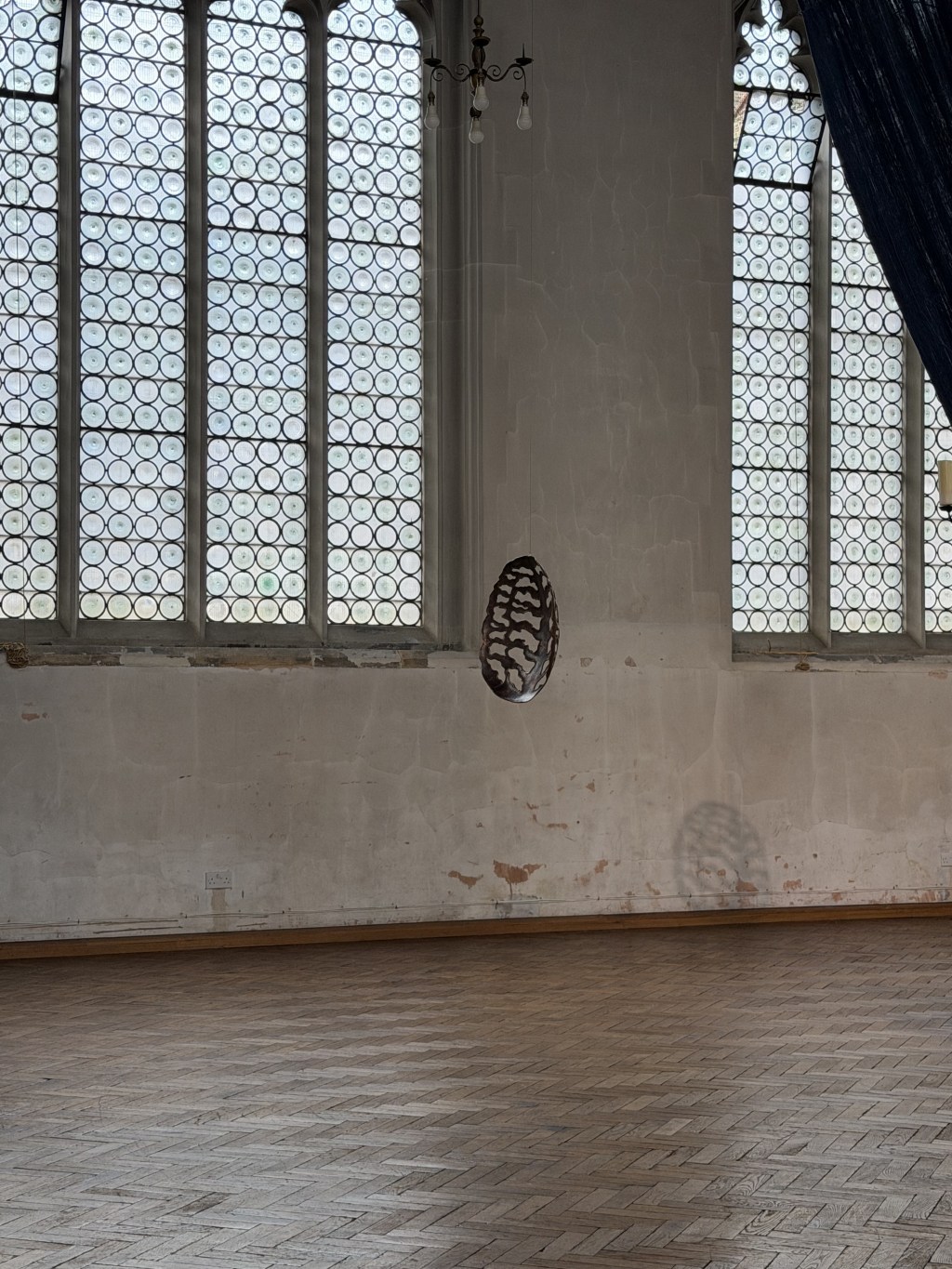
Most of us have had the experience of walking into a typical white cube gallery, where nothing distracts you from the process of looking at art. These white, hospital-like spaces offer a sense of neutrality and help to establish a direct contact between viewer, painting, and painter, giving the art its own voice. Yet, personally, almost every time I find myself in such a gallery, I feel as though I am being shouted at by the surrounding artworks: there is little to discover, as everything is too loud and almost too explicit. With this feeling in mind, I read Hans Ulrich Obrist’s iconic Ways of Curating. The book consists of short autobiographical texts in which Obrist reflects on his long and distinguished career with the projects he has worked on. Although they cover different periods, artists, and movements, most of the texts return to one thing – unusual ways of curating. Obrist talks at length about using unexpected spaces, such as hotel rooms and even his own kitchen – the setting of his famous Kitchen Show (1991). Many of his projects require visitors to be curious for the work to be seen in the first place. They establish a close bond between object, space, and viewer – in other words, they are largely site-specific. This approach actively engages the viewer, and specifically for me, it became an answer to the tension that I have felt in more classical gallery spaces. Around the same time, I visited Nomin Zezegmaa’s first UK solo show, You Who Sing Into Existence, at St Cyprian’s Church. It widened my perspective on how spaces and objects can work together. In this article, I want to discuss how, for this exhibition, the choice of space creates a niche way of perceiving Zezegmaa’s work, and perhaps, even adds another layer of meaning for the viewers to discover.
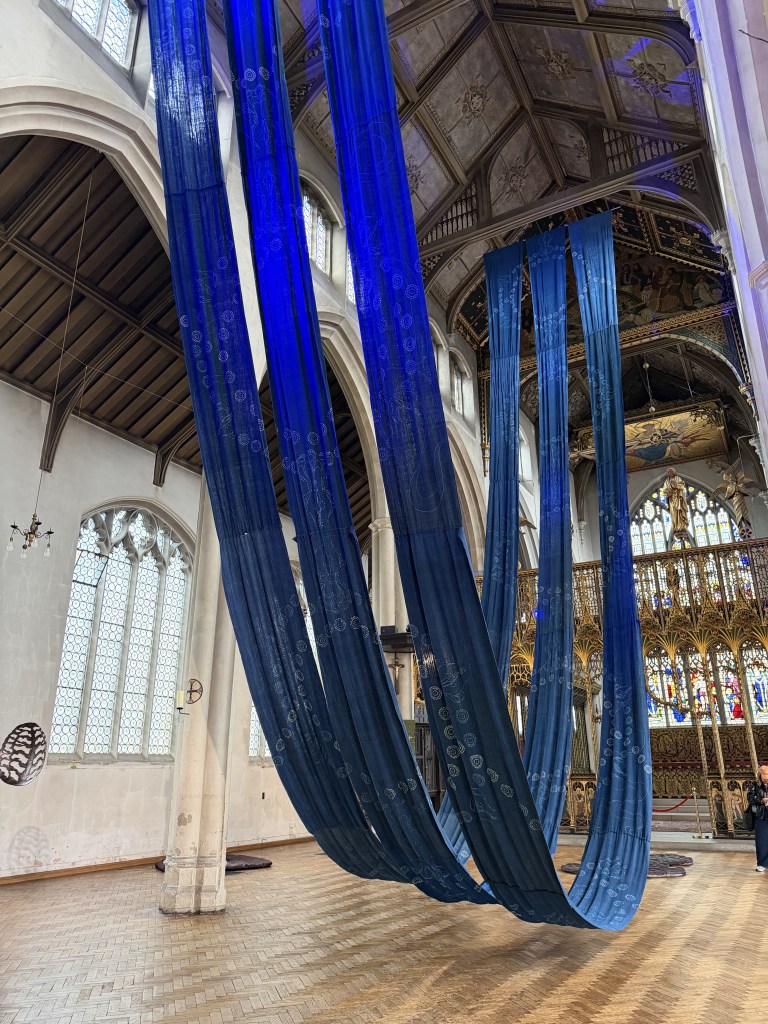
As mentioned earlier, You Who Sing Into Existence is the first UK solo show for the Ulaanbaatar-based artist Nomin Zezegmaa. It was presented by the Bagri Foundation as the inaugural exhibition of its new Springboard programme for artists from Asia. Her practice is centred on Mongolian cosmogony, and she is deeply interested in exploring questions of matter, spirit, and ancestral memory. The London show focuses mainly on textile work: it features a 27-metre-long hand-dyed indigo batik, hung from the ceiling in three lengths, as well as silk rugs laid on the floor for the visitors to lie down and look up at it. Another major part of the exhibition is her metalwork: floating copper sculptures built around organic motifs rooted in the Mongolian artistic tradition and way of life. Sound is also important: a newly commissioned work, Urtiin Duu, draws on the Mongolian Long Song, a musical tradition practised for over 2,000 years.
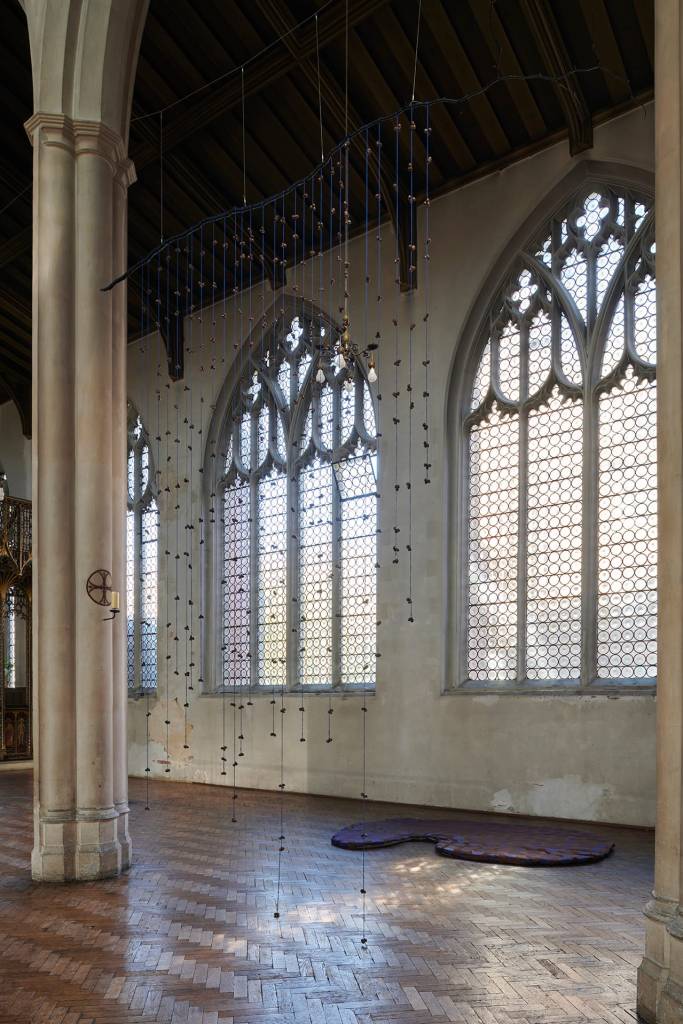
This exhibition could have occupied any space. However, the curator Chelsea Pettitt, Director of the Bagri Foundation, and Zezegmaa herself chose St Cyprian’s Church in Marylebone – a visually striking, Grade II listed neo-Gothic building, characterised by its rich colour and ornamental detail. At first glance, this decision might be anticipated as an effective way to create friction between minimalist, non-Western art and a space that exemplifies one of the renowned styles in Western art history. Yet, the conflict simply didn’t happen. Being there, the connection felt organic, with no argument between two distinct visual languages. I believe this is mostly due to what Zezegmaa described as ‘subtle interventions’. Much like Obrist’s approach, the art aims to elevate the environment by adding another layer to it, not to overpower it. This is clear in the ease and flexibility of the exhibition. Visitors could linger freely around the pieces and take up unusual positions for a church, such as lying on the rugs. In the materials, this liberation becomes airiness: the translucent indigo-dyed cotton of the batik sways gently in the draughts. Even the metal plates hanging in the arches are soft and delicate, with gaps in between that create a line of sight through them. The traditional singing is also so subtle that the sound gradually simmers into your ears. The gracefulness of these interventions extends to practical aspects as well. St Cyprian’s is an active church, so services continued while the show was running. To accommodate this, the exhibition was designed to be mobile: the batik could be tucked against the side walls and the rugs could be put away. This adaptability meant that the exhibition did not disrupt the everyday life of the church community, and the two could share the space with mutual respect, just like their cultures.
Another aspect of this co-existence was neither intended by the curator nor the artist, but it became crucial to how I perceived the exhibition. In The Stones of Venice, John Ruskin compared Gothic architecture to a forest. Gothic visual language has also often been associated with femininity, in contrast to the masculinity of classical architecture. Zezegmaa’s work draws on similar associations. The blue – a recurring colour in her own practice and in Mongolian visual tradition – of the batik references the Eternal Blue Sky (Tengri) stretching across the steppe. Textile as a medium evokes the notion of domestic craftsmanship traditionally associated with women. The forms of the sculptures, which recall trees and clouds, also create an earthly and natural sensation. Altogether, the exhibition dissolved the church walls and I felt like I was carried out into an open landscape, while being deeply connected to it. In my opinion, this was possible through the harmony of Gothic architecture, bringing in its vegetal motifs and forest-like quality, and Zezegmaa’s work, which draws directly on Mongolian tradition and nature.
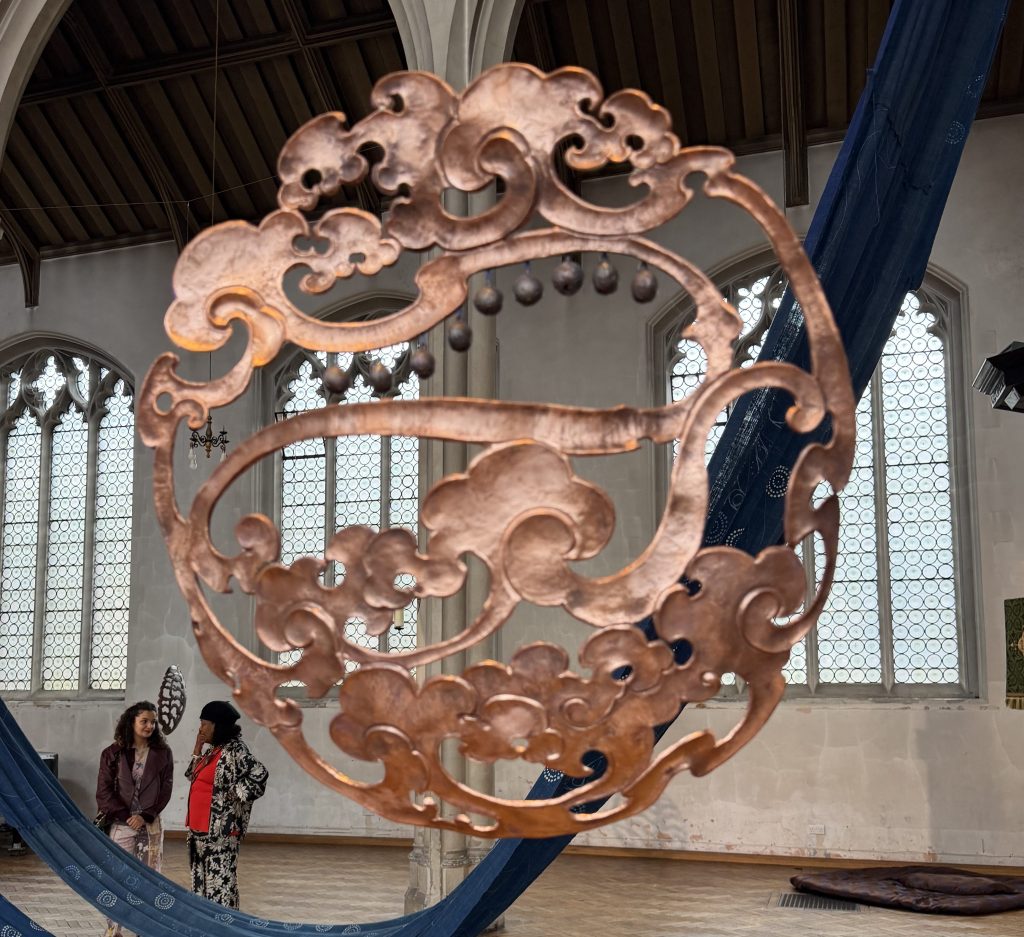
You Who Sing Into Existence is a masterclass in exhibiting respectful diplomacy between different cultures, visual styles, communities, and eras. Instead of competing, the space and the artworks collaborated to create a richer experience for the visitors. They can appreciate the environment and the artisanship equally, while also cogitating on their own relationship with the two. As mentioned before, many pieces are interactive, and some even welcome direct contact: this collaborative freedom allows visitors to integrate with the space and experiment choosing the angle from which they want to view the work. Unlike more traditional gallery spaces, this exhibition opens up a dialogue between the art and visitor – very much in the spirit of the unexpected venues that Obrist champions.
Edited by Victoria Min
Cover image: Nomin Zezegmaa, [name unknown], Image taken by author (2026)



Leave a Reply