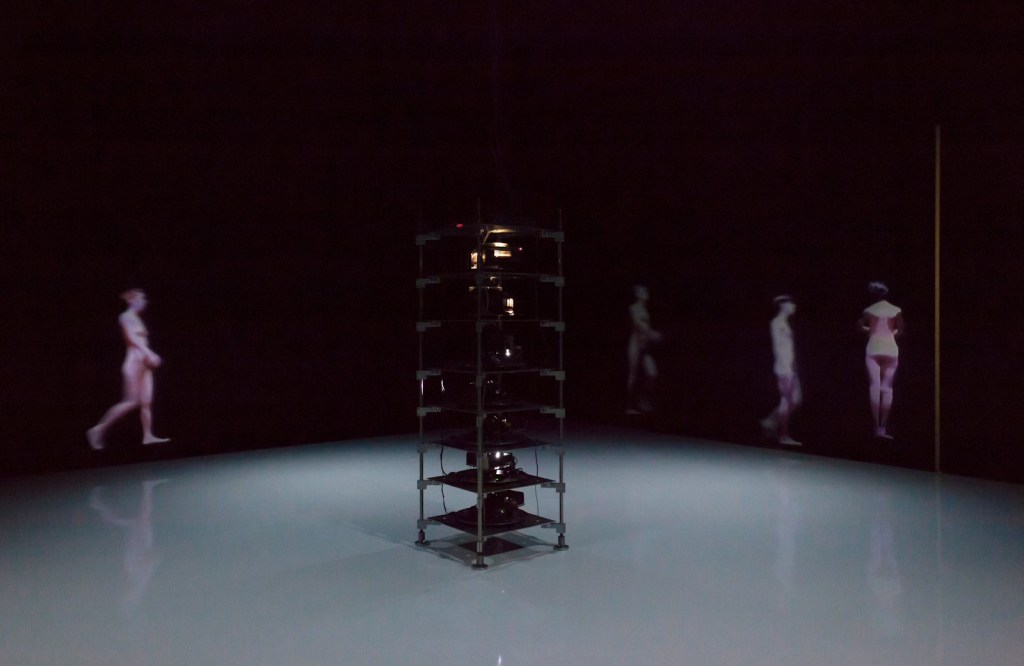
In the week leading up to February 14th, I attended Elliot Gibbons’s lecture on the Kyoto-based art collective Dumb Type, its founder Teiji Furuhashi, and his immersive installation Lovers (1994). It struck me that this chronological “coincidence” resonated less with the conventional anticipation of Valentine’s Day than with the spirit of Anti-Valentine’s Week – a cathartic alternative to the romantic celebration directed at singles. Furuhashi’s Lovers stages people moving through the same space, their bodies overlapping, but never fully encountering one another. Read from the vantage point of AI-mediated relationships today, the artwork appears less as a historical artifact and more as a prophecy for love anatomy in the age of ChatGPT.
Teiji Furuhashi emerged in a decade marked by the spread of sexually transmitted diseases in Japan and opened up a discourse on the shift from xenophobia-inflected sexual mores to a confrontation with the pervasive threat of AIDS. In the 1980s, Japanese media used media campaigns to situate HIV carriers within marginalised categories such as homosexuality, prostitution, and the so-called ‘disease of foreigners’, thereby drawing a line between sanctioned normative love and forms of intimacy that lead to virus infection.


Lovers was first presented in the inaugural exhibition at MoMA in 1994, one year before Furuhashi’s death from an AIDS-related illness, constituting a final gesture in the artist’s struggle against the stigmas surrounding ‘deviant’ forms of intimacy.
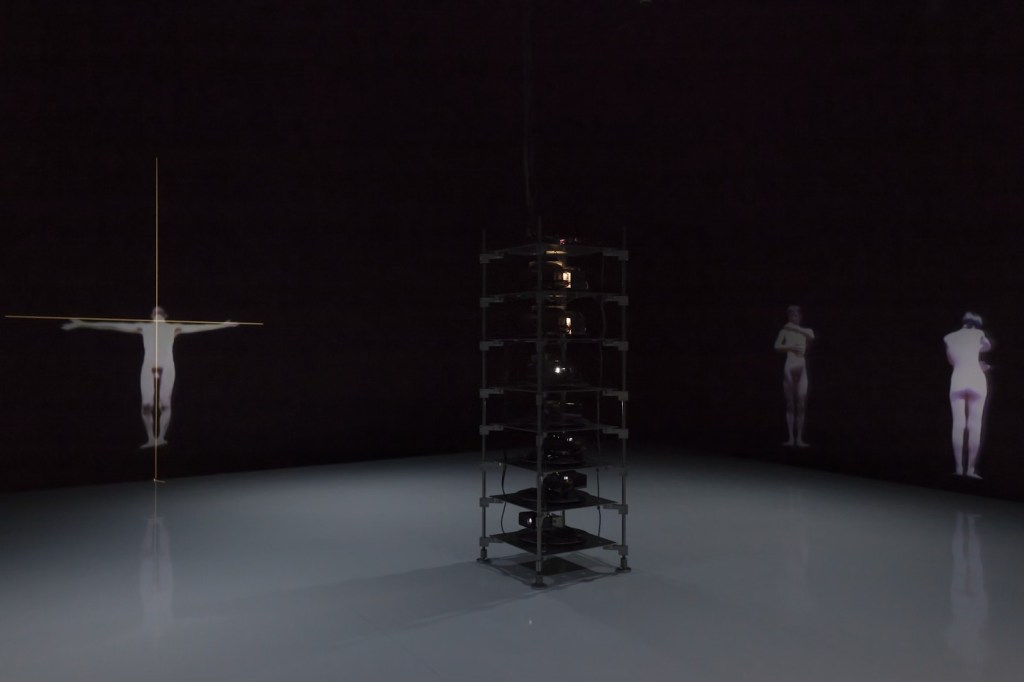
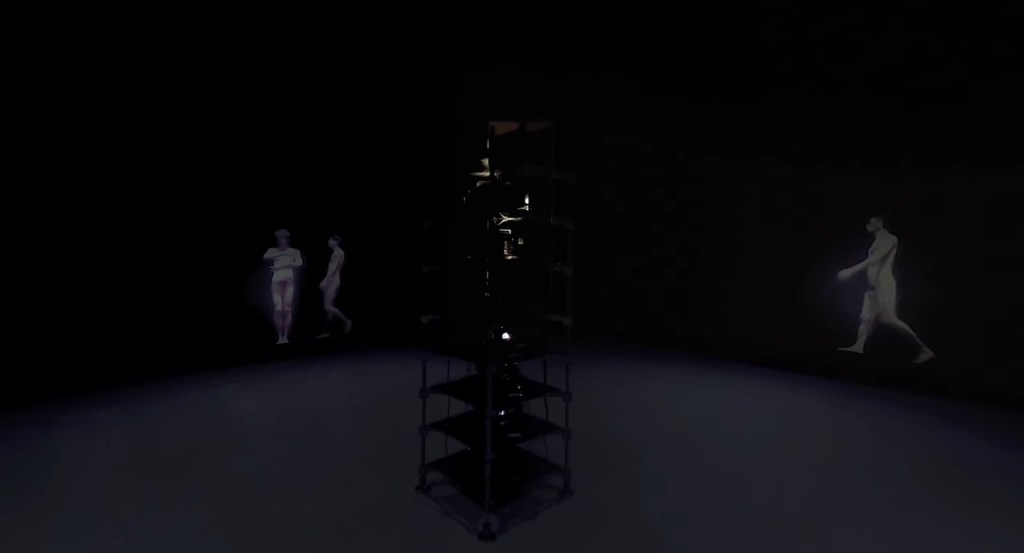
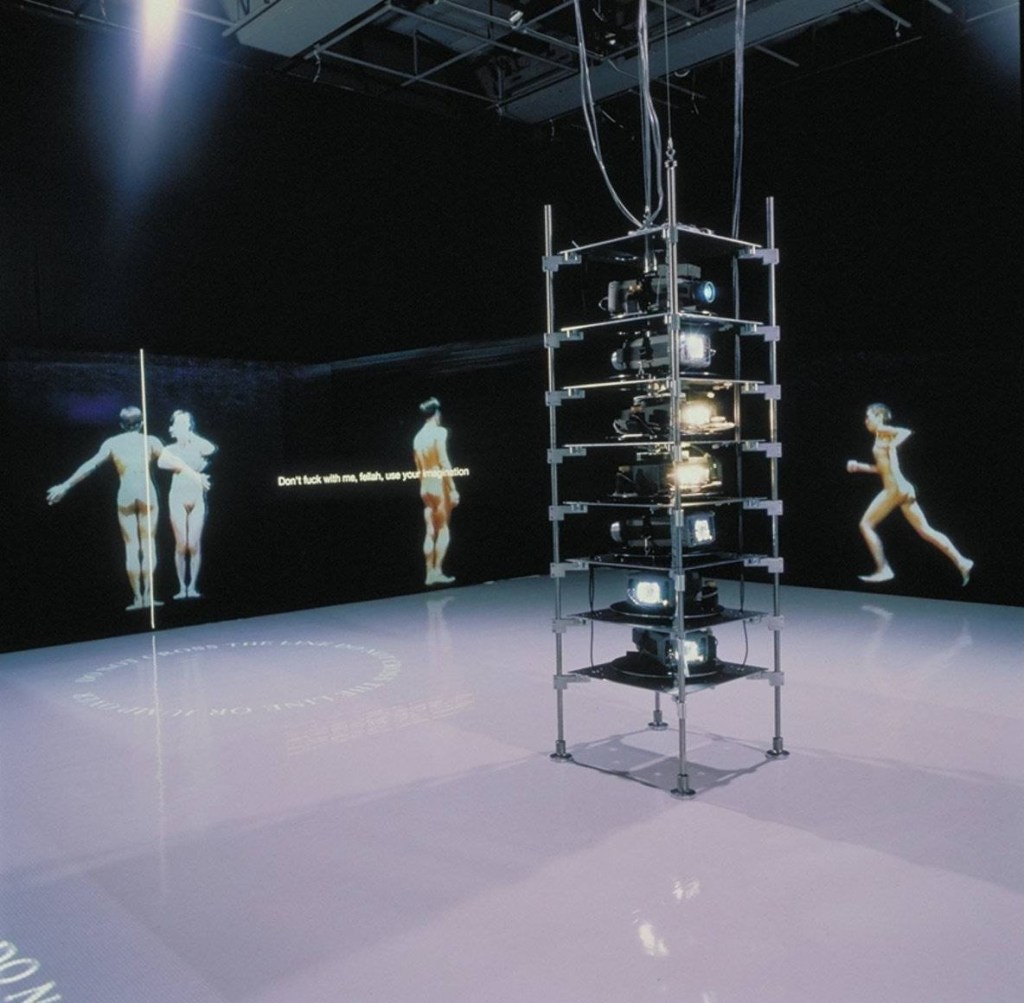
Moving images of luminous, ideally proportioned nude male and female bodies, and one figure which is Furuhashi himself, are projected onto the walls of a dimly lit room from eight separate projectors. A man holds empty space as if embracing a beloved woman. She appears in another projection, running, hovering, slender and semi-transparent, positioning herself behind him, encircling a dark vacuum in whose arms he is no more present than she is in his. Both figures drift through the space in Brownian motion, their eyes closed, as though submerged in a dream of one another, in love with the phantasm of a person. At the moment of crossing paths, one figure assumes a cruciform pose while the other continues to embrace the void, evoking contrasting symbols of divine love and suffering accordingly.
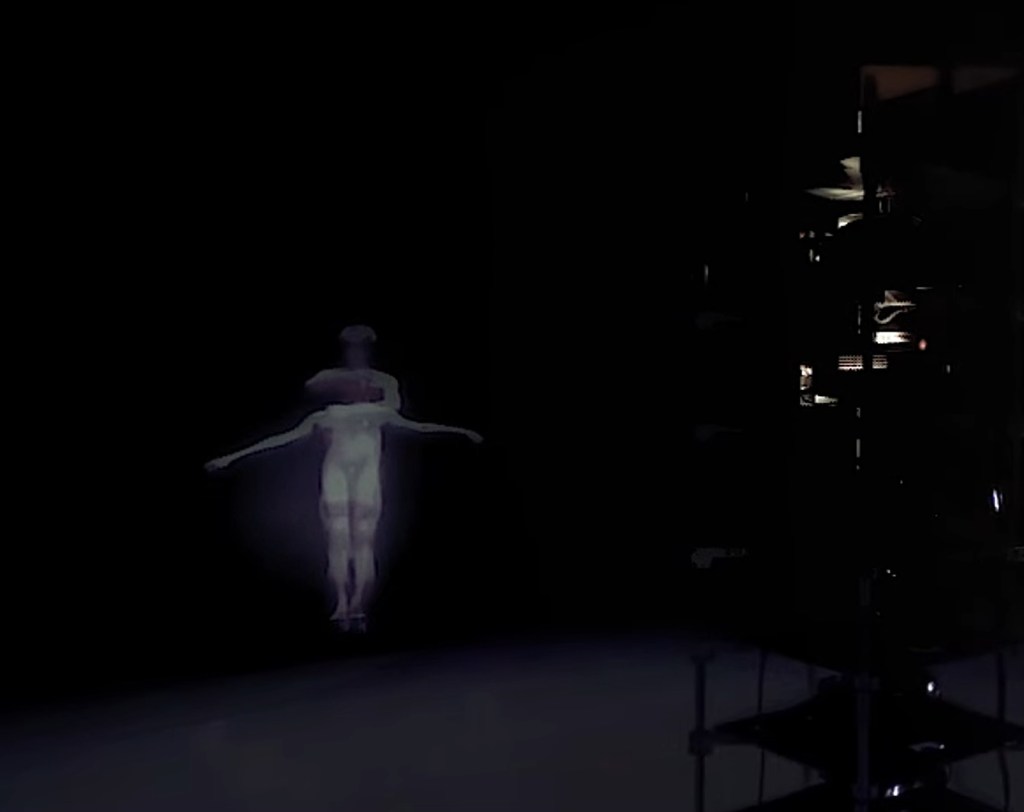
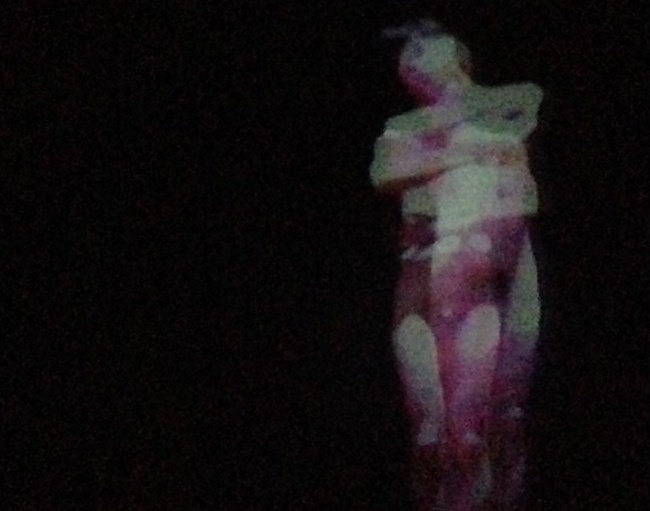
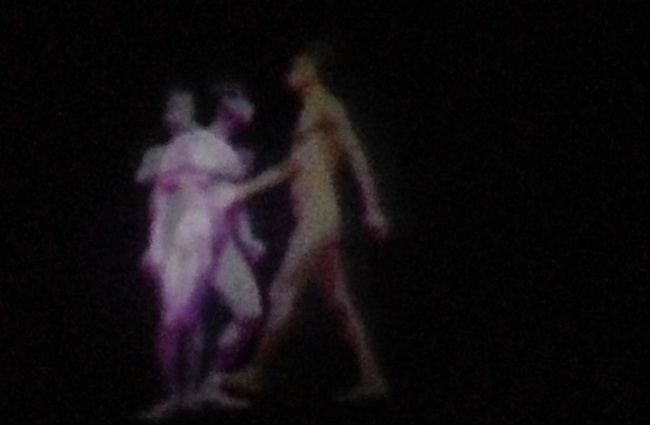
Contemporary Adam and Eve, prototypes of heterosexual union embodied by the central figures of the work, Furuhashi has rendered them estranged, just as ‘lovers with AIDS’ were talked about in propagandistic advertising campaigns and posters. The Japanese government framed the virus as a destructive force. Furuhashi, by contrast, refigured it as a productive one, capable of unsettling monolithic conceptions of love and undoing the rigid distinction between those lovers presumed at risk of infection and those assumed to be safe. “Even when they are together they are very alone” – the pursuit of a mirage suspended between the normative categories of man and woman makes it possible to recognise friendship and trust as the only forces that can truly sustain love. The prejudice that only opposite-sex lovers can form a stable union disintegrates the moment the artist directs our attention to the impact of mass media and technology on human relations, as the truly decisive factor in the formation of amorous attachment.
The traceable dependence of intimacy on machines and the digital age in Lovers is, in fact, a call to seek compromise with existing technologies. The projected images are principal, but the projectors, due to their positioning in the centre of the tower-tripod, are fetishised in such a way that they reinforce their role in the installation. It looks like they are in control of when the image of a body will dissolve completely, and when a new one will appear throughout the 15 minutes that the media files last.
Furuhashi’s Lovers exist across multiple dimensions of projections, but in 2026 how often do we construct an image of the beloved in our own minds? How often do we stumble over these projections? And what happens when the central technological innovation of the twenty-first century, artificial intelligence, begins to intervene in this process?
AI has proved itself as one of the new machines capable of orchestrating the emergence and dissolution of romantic illusions. A recent nationwide survey by Obsurvant suggests that one in five Gen Z and Millennial UK respondents who use AI chat platforms, turn to them for relationship advice. ChatGPT therapists become refined substitutes for the internal dialogue we conduct with a self-fashioned image of the other person. By uploading message histories or recounting conversations, the phantasm of the lover assumes a more complex, coherent, and plausible form that responds, analyses, and offers guidance on how to navigate intimacy. For some, this substitution extends so far that it develops into sustained dialogues with a non-existent version of the beloved. At the point where such interaction reaches its emotional climax, one may find oneself, like Furuhashi’s figures, embracing an imagined void in pursuit of an AI partner.
It is at this juncture that Lovers compels me to reconsider the work as permanently aligned with the ethos of Anti-Valentine’s Week, where relationships navigated through AI risk becoming indistinguishable from their absence. The moment agency is ceded to the machine, intimacy ceases to function as a reciprocal exchange. What remains is a loop of projection and return, a closed circuit in which one ultimately confronts only the technologically mediated echo of oneself. Behind the theatre of paper hearts and Valentine cards, the question is no longer whether love is celebrated, but whether what stands in its place is genuine friendship or merely its robotic simulacrum.
Edited by Saffron Watkins
Cover image: Teiji Furuhashi, Lovers, 1995, multimedia installation, Photograph by Jonathan Muzikar, New York: MoMa
 Paper Galleries
Leave a comment