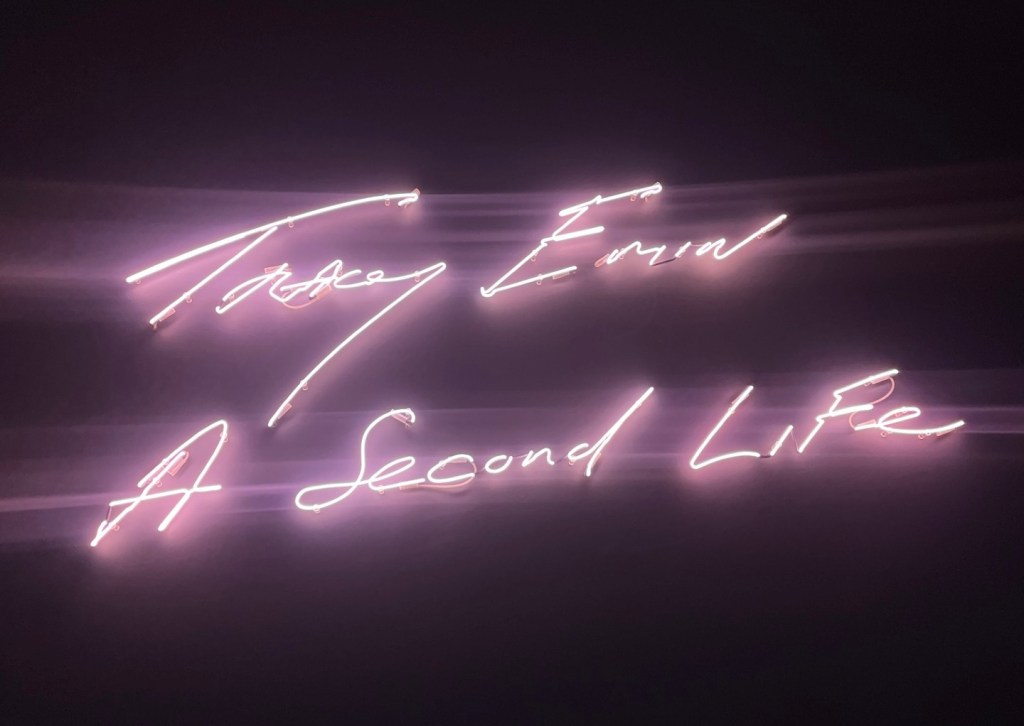
Tracey Emin’s landmark exhibition ‘A Second Life’ threw itself into the London Artscape at the end of February. Her ‘Sex and Solitude’ at Palazzo Strozzi in Florence last year left me wanting more. The major retrospective, held at the Tate Modern, spans the entirety of Emin’s career from the late 90s to today and includes paper works, embroidered blankets, bronze sculptures, appropriated objects, neons, video art, and large-scale canvas paintings. I won’t give a comprehensive overview – I recommend seeing the show for yourself – but I’ll point out some of my highlights.
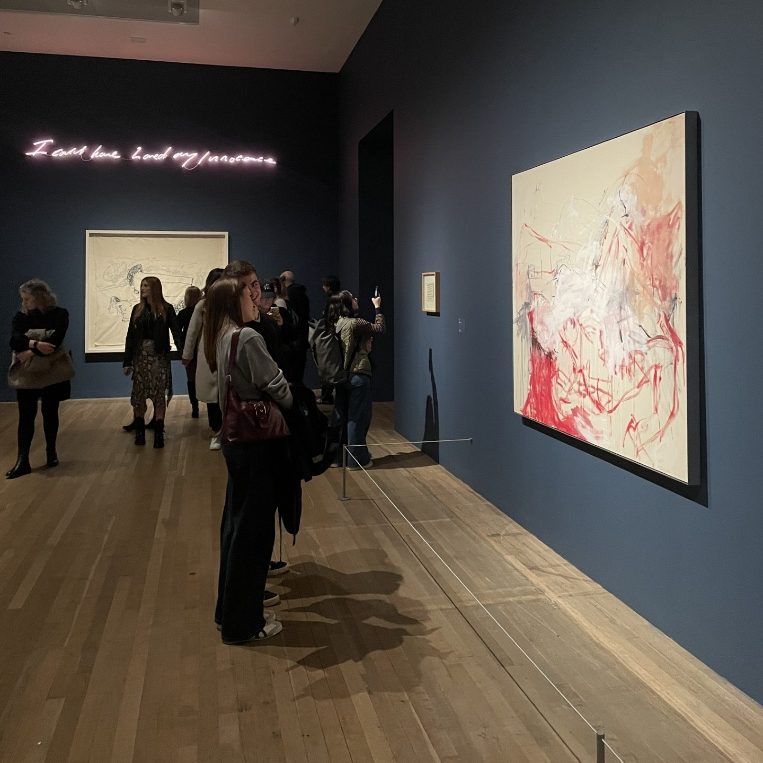
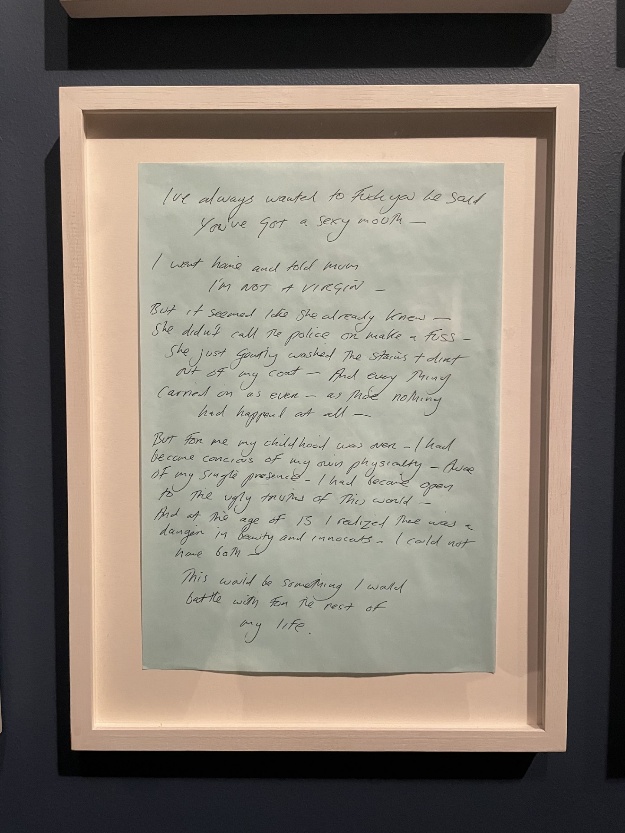
Upon entering, you’re presented with what Emin claimed early in her career would be her first and last exhibition. The artwork is titled ’My Major Retrospective’ and represents a collection of tiny photographs of the artworks she had destroyed after her first abortion, sewn onto fragments of what she claimed would be the “last canvas she ever bought”. The overriding theme of this exhibition is established; this is a rebirth, a new major retrospective. Tracey is given a second life.
One of the first things that struck me were her paper works, simplistic and uninhibitedly confessional. Emin is simply one of the few artists who can rip a page out of her diary, put it in a frame, and call it “great art”.
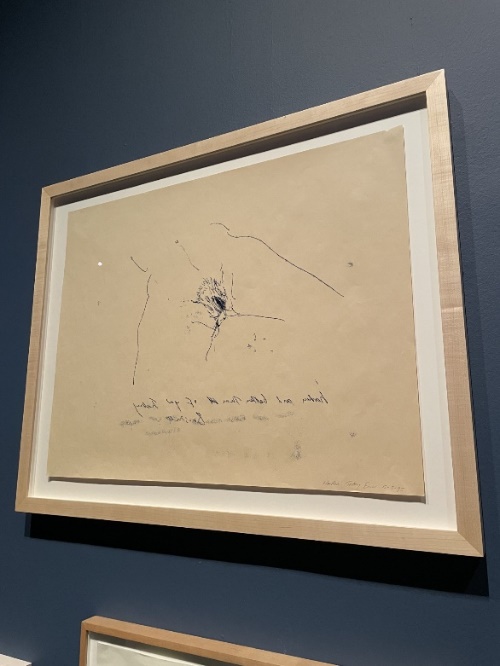
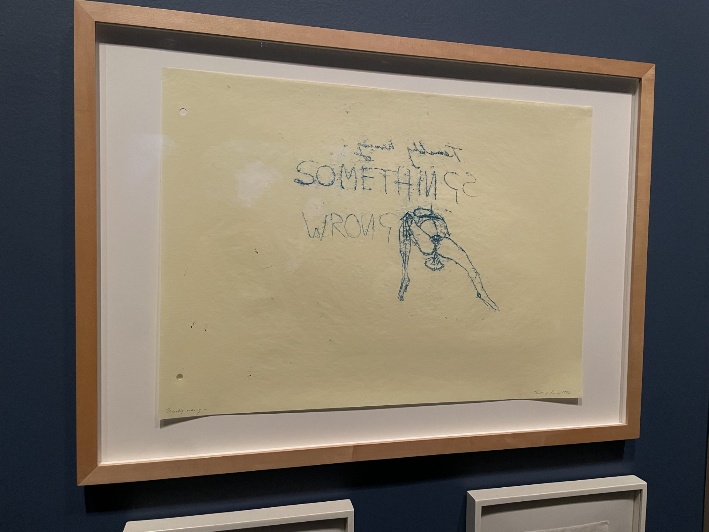
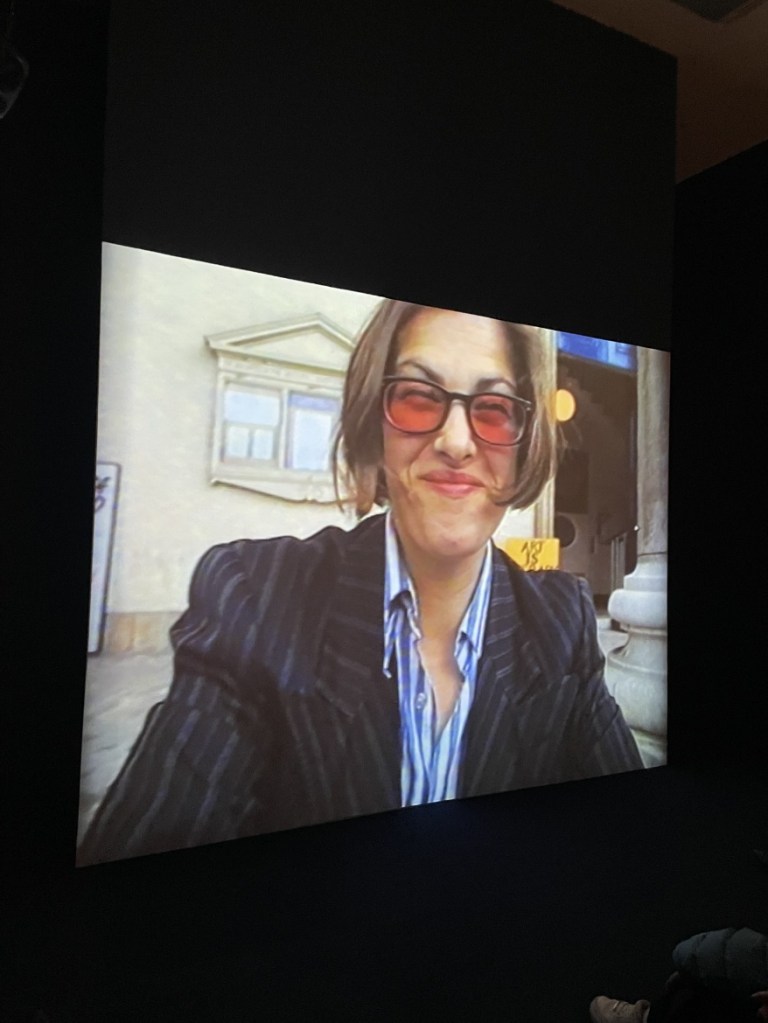
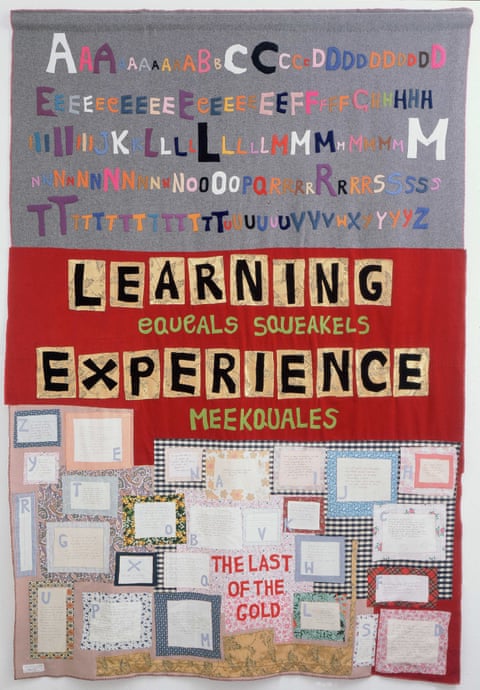
In room five, the video artwork ‘How it Feels’ plays alongside a mosaic of crudely simplistic line drawing monoprints. To me, this room marks the emotional turning point of the exhibition: Tracey speaks directly to the viewers about her experience with abortion. While I had studied Emin at A-Level, I never truly understood what she had gone through during this procedure. Emin, while standing in front of her GP, explains how she was turned away by a male doctor who refused to sign off on the termination, delaying it to six weeks later, causing major complications. While standing outside of the clinic where she had it done, she claims she “could hear the baby – which was now a baby inside [her] – screaming ‘No! No!’”. This sentiment is further echoed in the work ‘My Abortion’, a group of artworks comprised of three abstract watercolour paintings, a letter, and a frame containing a bottle of painkillers and a hospital wristband. The pathetic little bottle reminds us of the medical negligence Emin suffered, being denied the procedure and ignored when she spoke up about something being wrong. In ‘The Last of the Gold’, Emin spells out what to expect when getting an abortion, through a childhood classroom-like decorative embroidered tapestry.
While Emin’s feelings towards her experience seem convoluted or even nonsensical, while she may feel guilt, shame, and failure, she does not regret it. The key takeaway, in Emin’s opinion, is that abortion only has to make sense for the person who is having it, but how they feel afterwards is not something that should go unacknowledged. In a world where abortion rights are quickly getting set back and bodily autonomy is becoming obsolete, these works offer informative content and comfort to those who may need it. This exhibition marked my second time seeing Emin’s ‘The Exorcism of the Last Painting I Ever Made’, but Tracey’s close friend and curator of the exhibition, Harry Weller, brilliantly put this piece into context; it serves as an artistic exorcism after what she called her “emotional suicide”, which occurred after her first abortion.
“I’m surprised people have brought their children here,” my friend remarked to me, after seeing the photos of the artist’s bleeding, exposed stoma displayed down a dark corridor which leads into a room containing the seminal work, ‘My Bed’, on display again after ten years.
I remember seeing Tracey’s bed for the first time, urine-stained and unkempt, at the Tate Britain when I was around ten years old. I remember how, despite the clinical lighting and stark white walls around it, I felt I had entered an intimate space, the air felt heavy with emotion and anguish. I must admit the first thing I noticed was the small stuffed poodle, yet my eyes were subsequently drawn around the dirty carpet, to the used tissues, the cigarette butts, the bottles of vodka, the yellowed sheets and pillows; someone had truly been here. Objects of suppression and comfort, of girlhood and womanhood, pleasure and pain, all laid out bare.
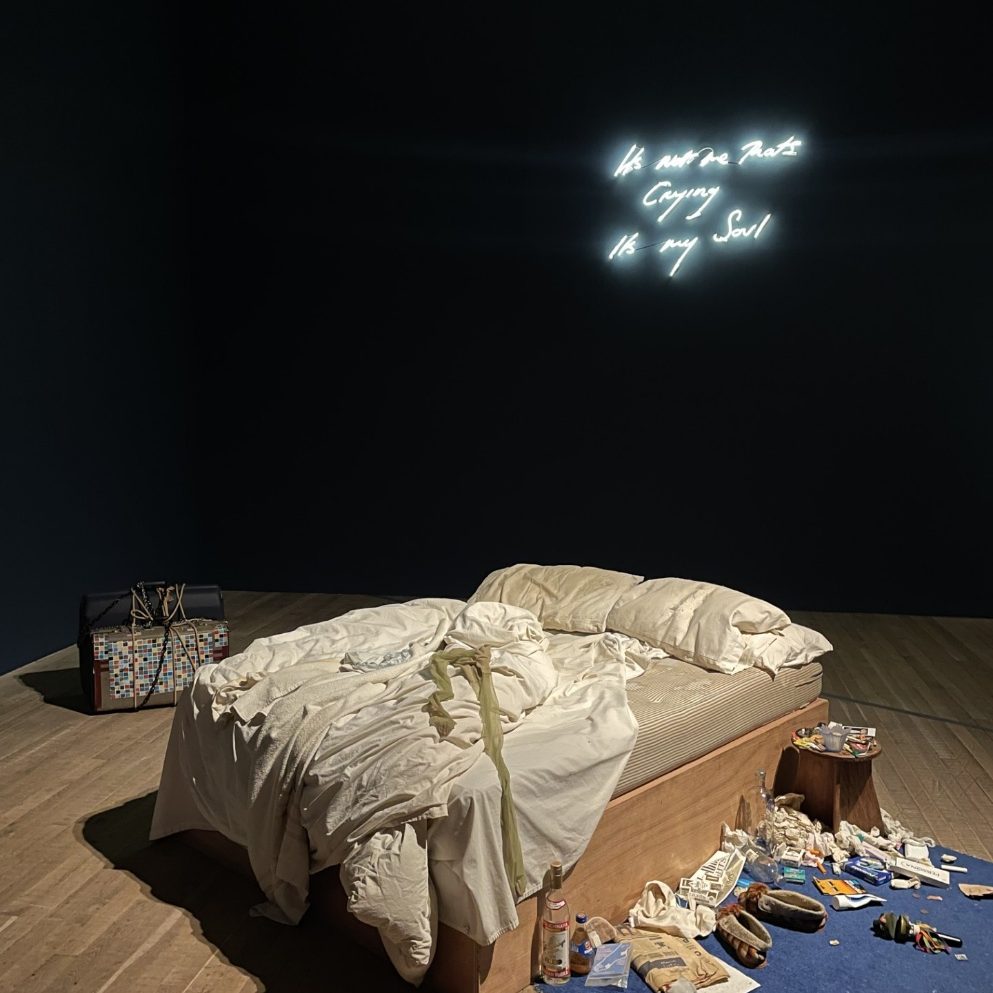
We are confronted with the fact that young or old, in sickness or in health, disabled or able bodied, defecating, urinating or bleeding, a body is a body. We all have one, whether we like it or not. Women especially are denied this reality; we’re taught to hide or conceal the very human fact that our bodies function as everyone else’s does. It’s another way to dehumanise us, disable us, hinder our success, make us wait longer in line for the bathroom. I recently read “Pissing Women”, a book about Sophy Rickett’s influential series of photographs of women urinating standing up in the streets of London, with testimonies from writers, musicians and photographers, including a statement from one of my favourites, Juno Calypso. Emin’s work does something similar to Rickett’s photographs; they place a woman-piss-stained artwork in the middle of a white cube gallery and force you to look upon and admire their unabashed humanity.
Tracey Emin is the most human artist out there; from putting her guts on display to liking cat reels on Instagram, everyone can see a bit of themselves in her work and in her life.
Edited by Isabel Hume
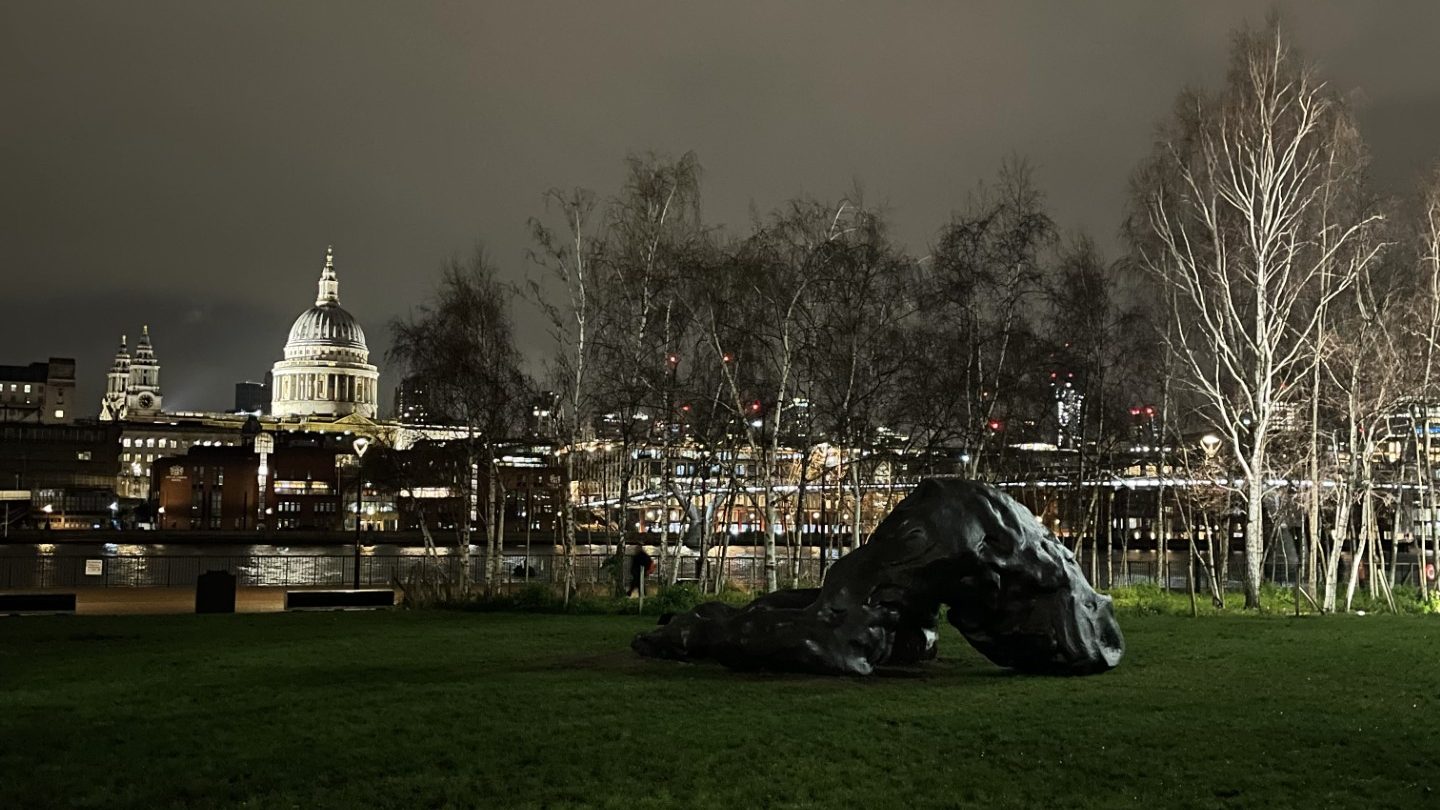
Cover image: Tracey Emin, A Second Life, 2025. Photo by author.
 Paper Galleries
Leave a comment