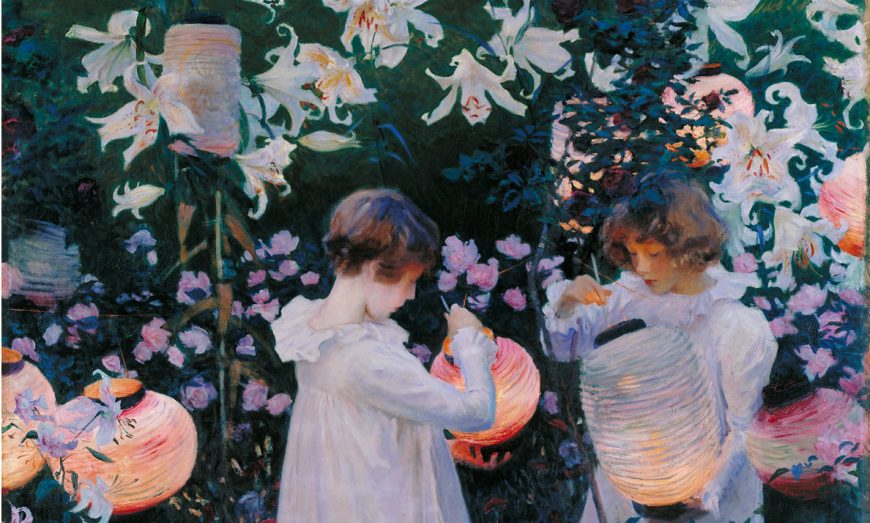
John Singer Sargent is widely regarded as one of the most accomplished painters of light in late nineteenth and early twentieth century art. Across his portraits, landscapes, and murals, Sargent uses light not merely to illuminate form but to structure composition, convey atmosphere, and articulate social and psychological meaning. His approach synthesizes academic training, Impressionist experimentation, and a highly personal virtuosity, resulting in a body of work in which light becomes an active, expressive force.
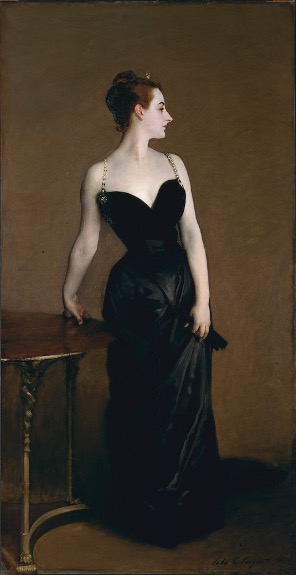
Sargent’s academic foundation, developed under Carolus-Duran in Paris, emphasized direct observation and tonal unity. From this training, Sargent learned to model form through broad areas of light and shadow rather than through meticulous lines. Light in his work often defines volume through economy of means: a single highlight along a cheekbone, sleeve, or forehead can establish the solidity of a figure. This technique is especially evident in portraits such as Madame X (1883–84), where the stark contrast between the sitter’s pale skin and the dark, undefined background creates a dramatic, sculptural effect. Here, light isolates the figure, heightening her presence while simultaneously contributing to the painting’s air of aloof elegance and tension.
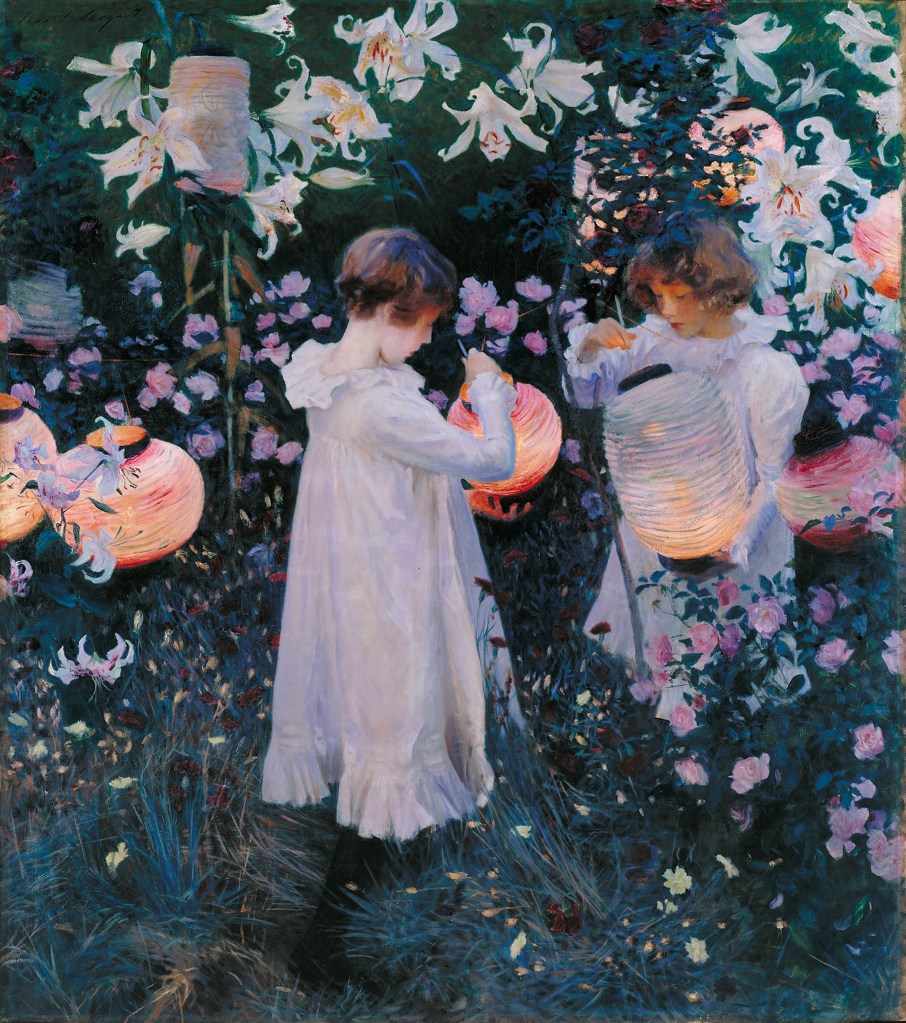
While rooted in academic realism, Sargent’s handling of light was also deeply influenced by Impressionism, particularly in his outdoor scenes. In works such as Carnation, Lily, Lily, Rose (1885–86), light becomes transient and atmospheric rather than fixed. The soft glow of lantern light at dusk diffuses across the canvas, dissolving hard edges and creating a sense of fleeting time. Sargent captures not a single source of illumination, but the interaction of multiple light effects, twilight, artificial glow, and reflected color, demonstrating his sensitivity to how light behaves in natural environments. This attention to ephemerality aligns him with Impressionist concerns, though his brushwork remains more controlled and deliberate.
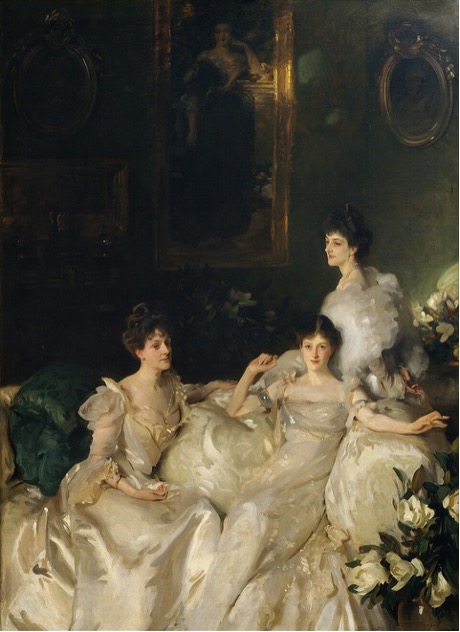
In Sargent’s portraits of elite society, light often carries social meaning. Figures are illuminated in ways that emphasize luxury, confidence, and authority. Satin gowns, polished furniture, and architectural interiors reflect light sharply, reinforcing the wealth and refinement of the sitters. Yet Sargent avoids uniform illumination; instead, he strategically obscures certain areas, allowing shadows to suggest complexity beneath the surface. This selective lighting introduces psychological depth, implying inner life without overt narrative. Light thus becomes a tool of characterization, as much as description.
In his later watercolors, Sargent’s engagement with light grows freer and more experimental. Transparent washes allow the white of the paper to function as light itself, particularly in scenes of sunlit architecture or figures resting outdoors. These works demonstrate his mastery of light as both material and illusion, achieved through minimal means. Rather than constructing light through contrast, Sargent often allows it to emerge naturally from untouched space.
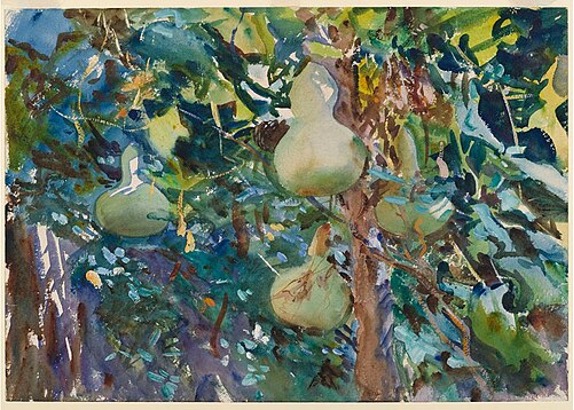
Ultimately, Sargent’s use of light is central to his artistic identity. Whether dramatic or delicate, social or atmospheric, light in his work animates form, directs attention, and shapes meaning. It bridges realism and impression, precision and spontaneity, making Sargent one of the most compelling painters of light in modern art.
Edited by Saffron Watkins
Cover Image:
Carnation, Lily, Lily, Rose, 1885–86, Tate Britain, London

 Paper Galleries
Leave a comment