Generative AI has advanced to the point where it can produce visual outputs from written prompts, creating images that often appear symmetrical, lifelike, and perfectly smooth. Such qualities have sparked debate over whether such works can be considered true art.
Take Indian designer and artist Amith Venkataramaiah, who uses the generative AI programme Midjourney to create images of a potential future where marine life fuses with plastic waste to survive in our polluted oceans. An example of this is his 2022 work Starfish 2. However, though its underlying message is certainly pertinent in today’s world, it somehow lacks a sense of urgency or any deep emotional impact.
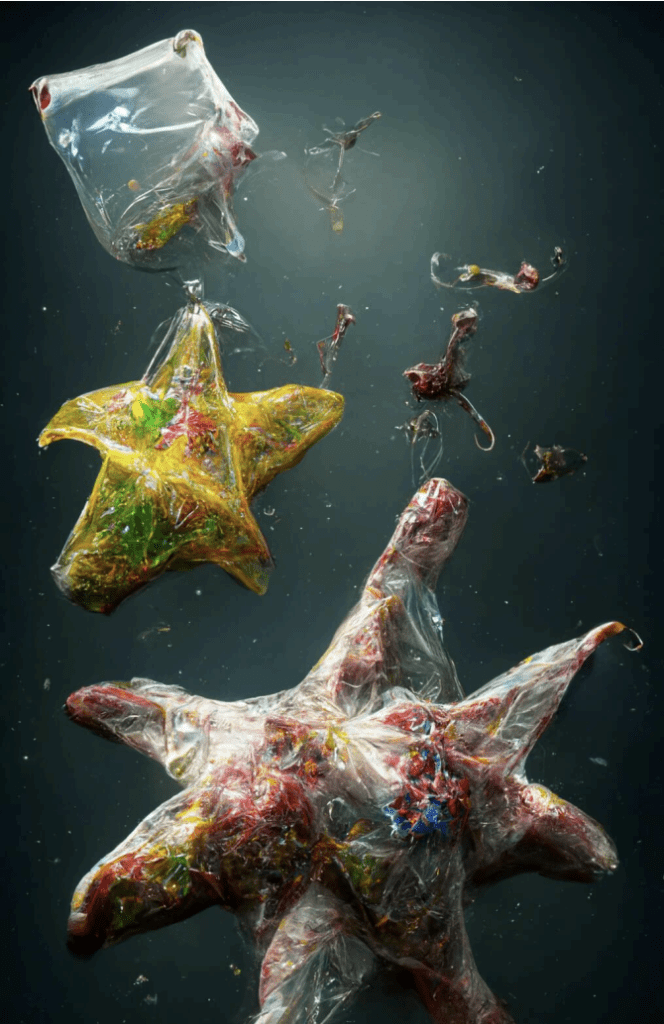
So what is it that is missing from Venkataramaiah’s art, and AI generated works in general? Beyond the fact that it seems inherently contradictory for AI to create a work of art that warns against the climate crisis when its very mode of creation contributes to this problem, its images are devoid of the creativity that’s specifically attributed to the human soul.
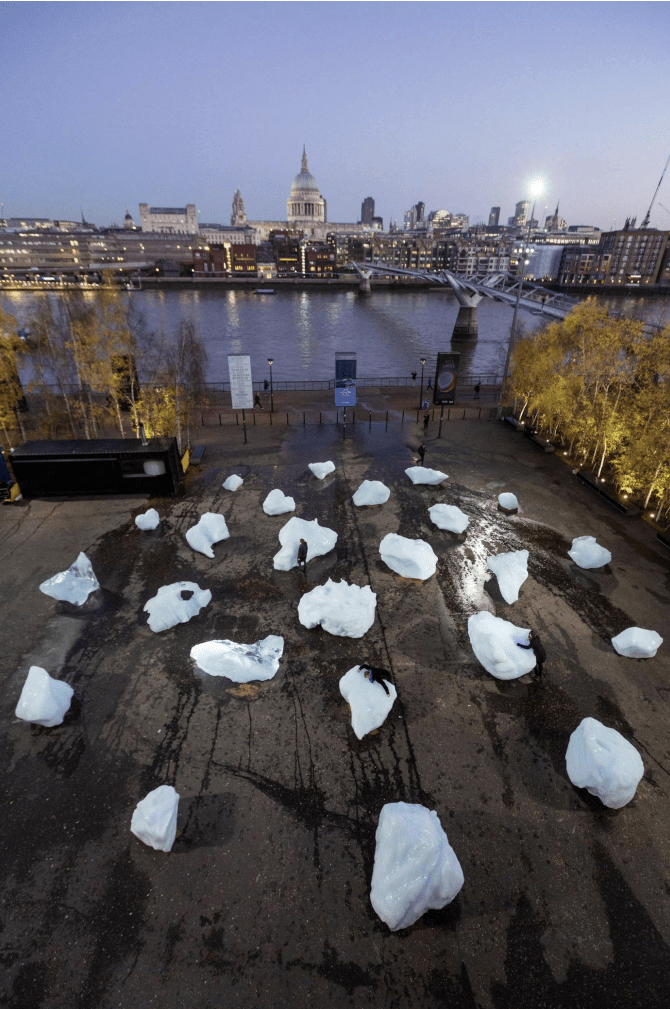
Compare this to Olafur Eliasson’s Ice Watch, where ice blocks from Greenland were brought to London to form a temporary sculpture that slowly melted before the viewers’ eyes. On the surface, these works of art are similar, both completed by contemporary artists who aim to raise awareness for climate change. They differ with how impactful Ice Watch is for the viewers, who are there to witness the ice melt away.
When people create art, their work is often shaped by the futile pursuit of perfection, inevitably tarnished by our flaws and mistakes, revealing the unique complexities of the human touch.
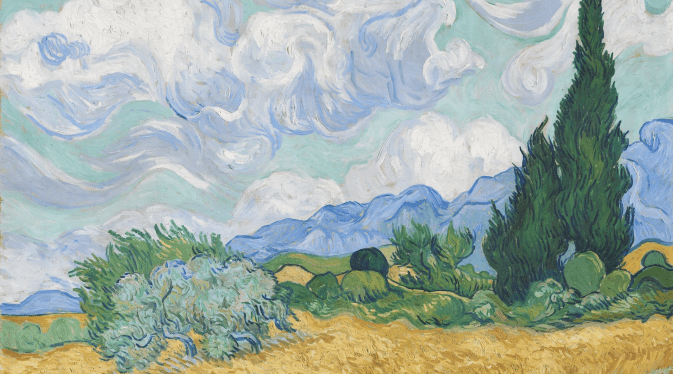
Van Gogh’s art, for instance, was far from perfect. His brushwork was sloppy, his wet-on-wet approach turned pigments brown, and his compositions lacked technical refinement. But it was these perceived ‘flaws’ within his paintings that made them so deeply personal, innovative and unique. In fact, he is now known for his loose brushstrokes that imbued the canvas with intense emotion and in retrospect, reflected his mental state.
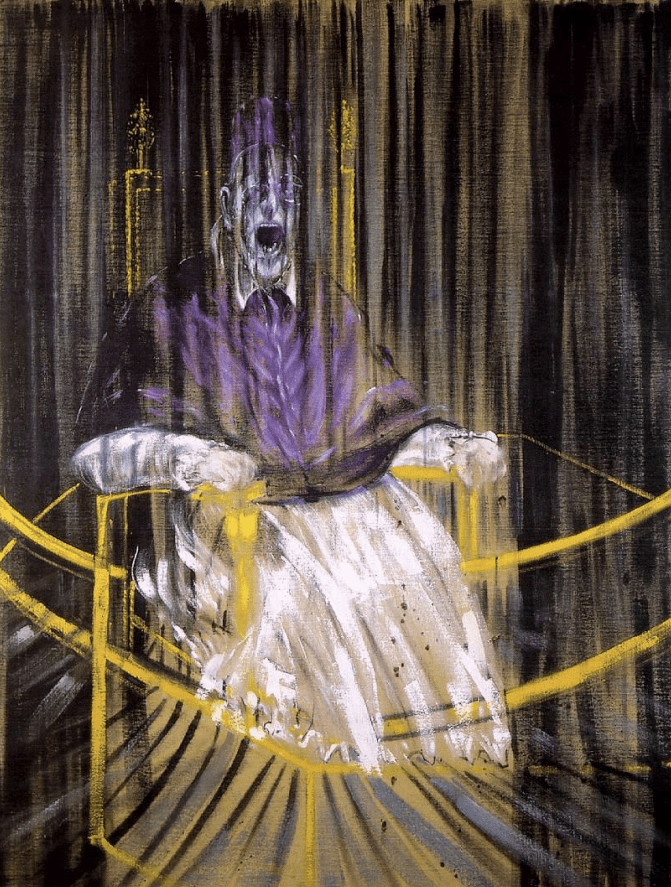
Using AI in any artistic medium, from fashion to film and everything in between, removes from the art making process the essential quality of creativity. In my opinion, art ought to entail bringing something entirely new and original into being, something that speaks to the artist’s individual soul, a quality that, in our modern age of technology, we have come to value most deeply. The most famous works of art can be easily identified by their creator’s specific style. From Francis Bacon’s tormented, disturbing portraits to Louise Bourgeois’ knobbled and gnarled sculptures – they all produce a distinct pictorial, sculptural or architectural representation of their soul, that no other person can recreate in quite the same way.
If humans are unable to replicate what others have created, AI, in all its soulless glory, certainly has no chance. Indeed, AI’s very programming is set up so that it takes pre-existing concepts and regurgitates them. Its ideas can never be unique, and its images never anything more than vacuous and disturbingly perfect. Art should be a way to connect more deeply with others, translating one’s personal ideas, perspectives and experiences into a visual format, something which AI cannot achieve.
Today, we are becoming increasingly reliant on AI, from Harvard students using ChatGPT to write their essays, to Vogue including their first AI generated model in their August 2025 issue. This dependency is only going to become more prevalent and all-consuming, crushing our ability to think creatively, eradicating the human touch and replacing it with something that is cold, plastic and devoid of any resonance.
However, people will soon start to realise that whilst AI can create an image or write a poem, it will never speak to us, touch us or connect to us in a way that human-made art can. The human touch is indispensable .
Edited by: Ariel Yuan
Cover Image: Vincent van Gogh, A Wheatfield with Cypresses, 1889
 Paper Galleries
Leave a comment