Not all art is meant to be hung on a wall, and maybe with the over-commercialisation of artworks in the modern world it shouldn’t need to be. Recently I’ve seen a lot of discourse on the apparent soullessness and emptiness of art fairs and exhibitions geared towards buyers not viewers. Suggesting that personal experience and genuine story telling are lost in the fine art world due to the emphasis on the market.
Personally, I think this argument is justified. When art became recognised as a form of wealth conservation, the production of art became less personal and more functional. This can be brought back to the Industrial Revolution where objects lost their personhood as the art of craftsmanship died, and man was replaced by the convenience of machines. We see this same shift today with the surge of AI art in popular spaces, knowing this is just the beginning. It’s not long before AI infiltrates ‘higher’ circles such as the art market, especially as it gets harder to detect and therefore harder to avoid. With the spaces of modern art feeling more commercial and online, it is necessary to expand what art is and what its role in our personal lives should be. Land Artists of the 60s and 70s such as Richard Long interrogated the function of art in modern society but truthfully we’ve been practicing a more transient form of art for centuries.
For Long, movement and action take precedence over tangible object when it comes to his choice of medium. In A Line Made by Walking (1967), exhibited globally in spaces such as the Tate Modern, The National Gallery of Scotland and the Getty Museum, the work itself is unreachable. Since the location was hidden from the viewer, it was likely only ever observed by Long himself.
The artwork is not the photograph of the line but the act of walking, embarking on an odyssey. The indentation of the grass, the dialogue between man and earth and the mark left by their interaction. As an attack on the art market and a critique of rising consumerism in the 60s Long removes the viewer from the art works, making it deeply personal. Whilst the photograph commemorates the moment, his work is truly ephemeral and temporal.
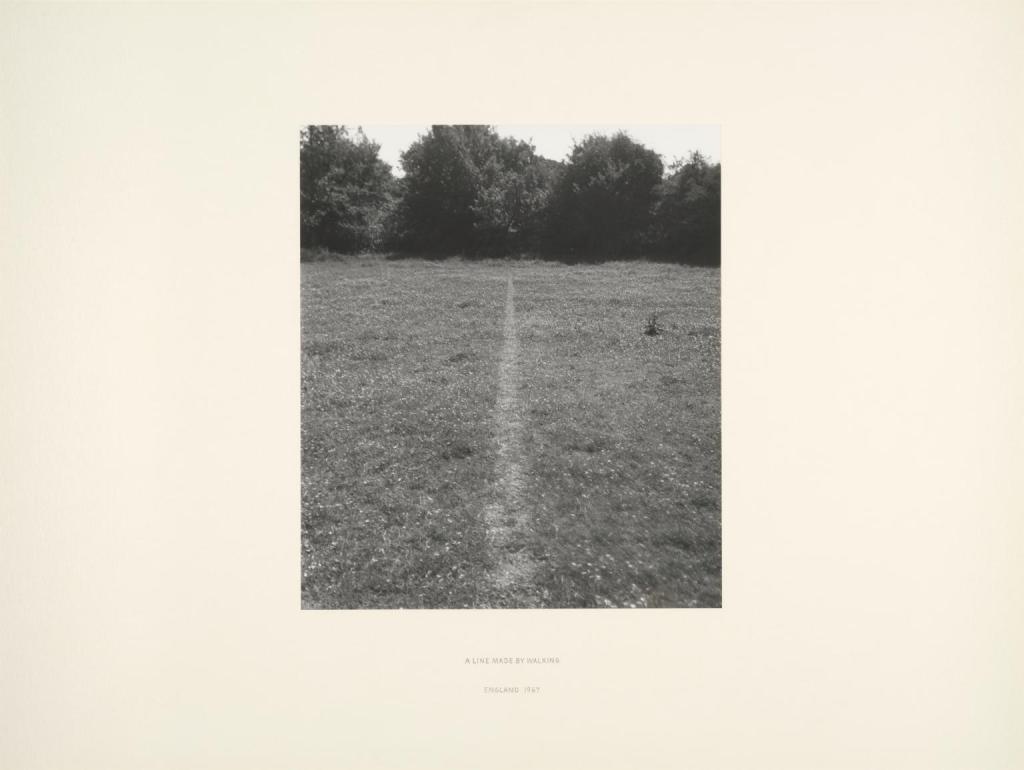
Of course there is irony in his work. Personally, I see Long as somewhat of a hypocrite creating an artwork which is meant to be transient but taking a photograph to make it permanent then selling the photographs and becoming a commercial success, is arguably quite insincere. The act of creation is much less personal for Long than he may have intended denaturing both his message and his work. However, land art technically predates both Long, and capital within the art market. The White Horses found across the country can be a testament to that, with Uffington’s White Horse being dated to the Bronze/ Early Iron Age.

Historically, humans have not just decorated the Earth but also themselves, as a far more personal practice than that of land art, tattoos can also be seen as a historic art form which convincingly counter-acts the impersonal nature of AI today.
Tattoos have a vast and rich cultural history. Some of our earliest examples of tattoos can be attributed to the mummy, Ötzi the Iceman, who died in 3230 BC. Ötzi flaunted an impressive sixty-one tattoos, with the most recognisable by modern standards being a cruciform shape on his ankle. Although today we would associate the cruciform shape with Christianity, it is almost impossible to assume what it meant to Ötzi.
Cultural tattoos, or tattoos as a response to a personal or lived experience are often respected — regardless of the current trend, as they are based from/on internal rather than external validation. Whereas tattoos which are plainly for the sake of following the trend inevitably become unfavourable after a short period of time, or worse they can eventually become offensive or harmful.
During the 2010s, a viral tribal tattoo trend came to be deemed as cultural appropriation of Māori tattoo art. Polynesian tattooing, outlawed in 1819 by Catholic missionaries and only recently saw its revival in the 1980s. This was an intentional act of cultural repression since the Māori tattoos use symbols to establish and strengthen their identity. Thus, the restriction of the art form was deeply political and the uneducated adoption of the aesthetic dismisses their cultural and personal importance.

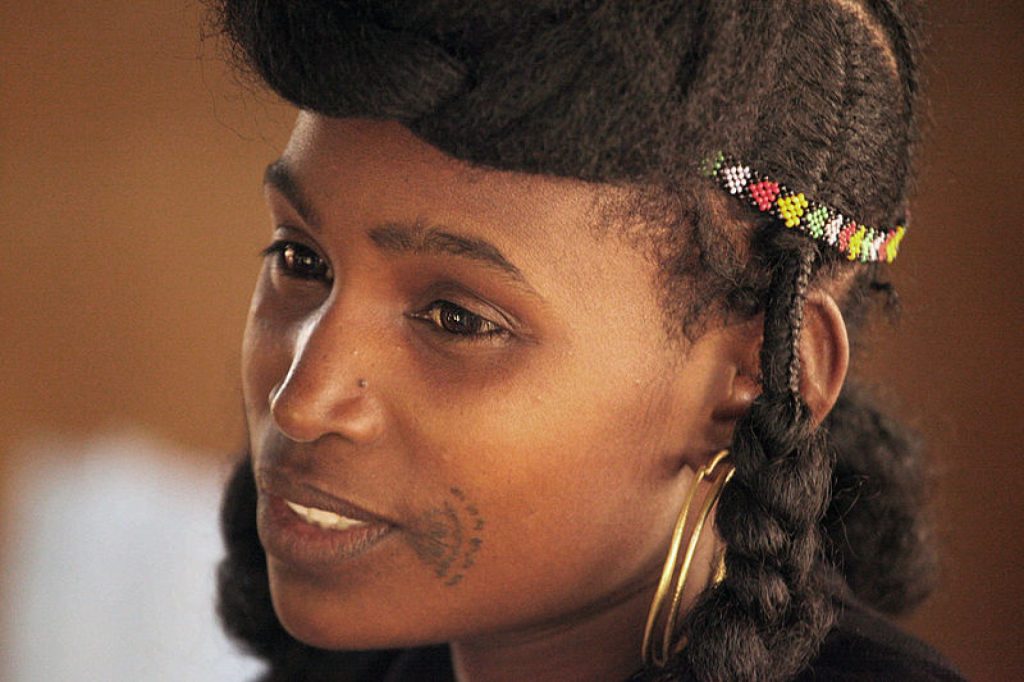
In West-African Nomadic culture, the Fulani people use lip tattoos as an aesthetically enhancing practice. For the Fulani women the tattoo around the lip is purely cosmetic as itsaccentuates their smile, through the colour contrast between white teeth and a black or blue lip. Influenced by Arab-Berber cultures, modern Fulani women turned to temporary methods of tattooing, such as henna which they tend to mirror important milestones or ceremonies within their lives.
In the tattoo world, people who gather tattoos over time based on a genuine love of culture, are called collectors, drawing a parallel to the art world. Treating the body as an exhibition of your lived-experiences and personal taste. Each tattoo functions as an expression of your life, marking your story through line and colour. Whilst there is limited capacity for variation in texture or space and depth, the body as a canvas is just as virtuous as wood panels and Cathedral walls.
In 1966, a year before Long’s Walk in the Grass, the flooding of Florence almost desecrated the historic city’s venerated collection of art. This led to the collaboration of professionals and civilians attempting to rescue the city’s historic objects. Images from the flood communicate an interesting dialogue between art, man, and nature in the wake of modernity. These historic (previously untouchable) artworks, held amongst modern people captured by a modern camera as they fall victim to the whims of the natural world, feels almost metaphoric and can assimilate to our relationship with art today. We as humans are much more focused on objects of beauty rather than the beauty of the natural world, we neglect it until it disrupts the harmony of modern life.
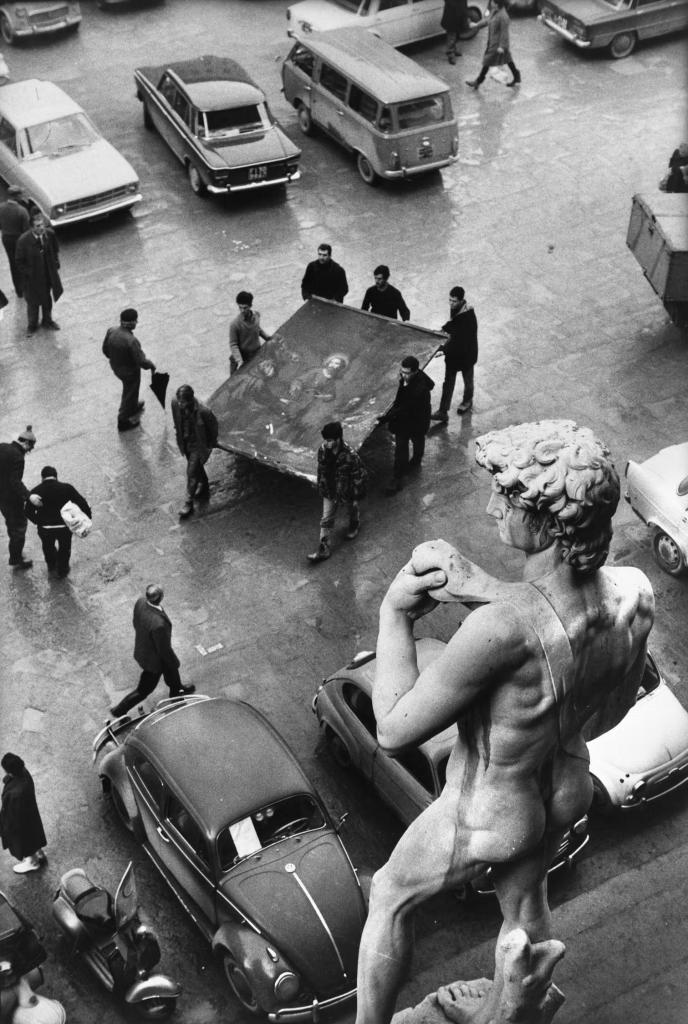
Frescos specifically were at a much higher risk due to their materiality, not only are they effectively immobile, but they are also sensitive to damp climates as water causes the plaster to crumble. Whilst they are impressive and beautiful they are meant to last. Created to be untouched, unattainable and awe-inspiring. However our bodies and the natural world operate differently, in reference to Platonic philosophy on the natural world, the body is immutable, it is ever changing, but to counter Plato this makes it beautiful. Tattoos themselves are technically the scars and stains we leave behind on the skin. Land art is effectively human force once again harming nature, it is transient because the act of creating it is more important than the final creation. The wrinkling of the skin and the regeneration of the grass continue the creation of the artwork, adding to the story being told.
Tattoos have been used to reclaim scars, reflect one’s devotion to faith, commemorate a loved one, compliment birth marks or moles. In truth it is not the tattoo that is the artwork but the body. Against the surge of AI media, perhaps we need to recall the timeless significance of art inscribed on the earth and our own flesh. They can be accepted as on par with the frescoes of Renaissance Florence, not behind in the queue of progress. After all, what will remain after the final flood?
Edited by May Jackson and Milly Howes
Cover image showing a Fulani woman with lip tattoos, from: https://www.uffizi.it/en/artworks/1966-flood-damages-to-art-in-florence
 Paper Galleries
Leave a comment