
Is it fair to claim that there is something melancholic about the relationship between black people and the sea? A film that encapsulates this dynamic through portraiture, unanimously adored by audiences of all races, is ‘Moonlight’ (2016). Directed by Barry Jenkins, the film’s most vivid cinematography displays the intrinsic connection between black men and the ocean, consistently through the colour blue. A colour which can also be recognised in almost all of modern Nigerian artist Ruth Ige’s work.
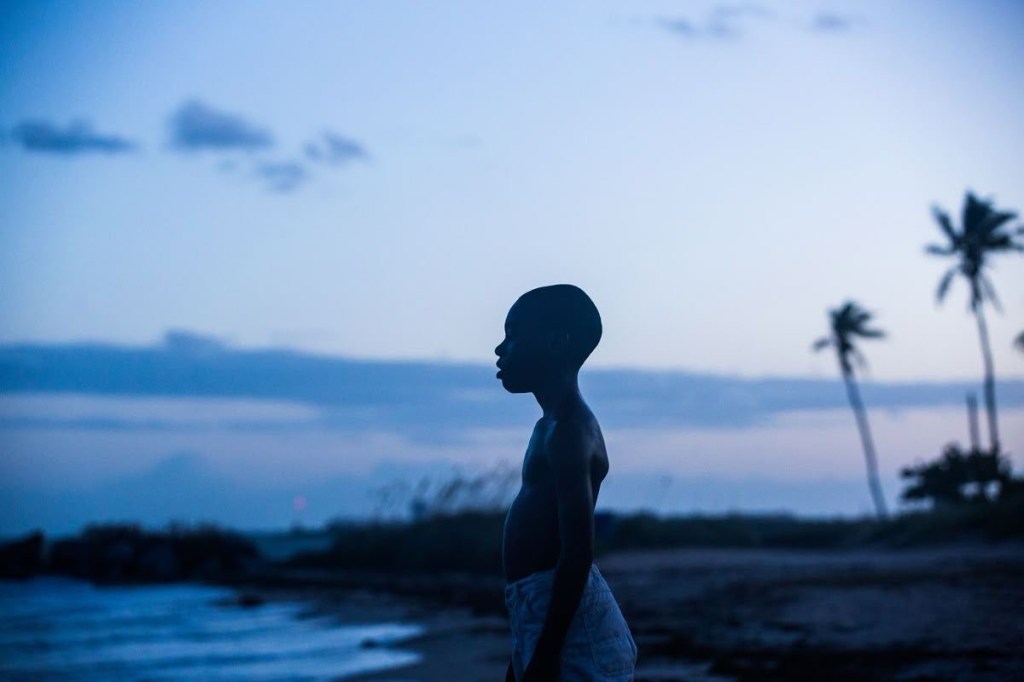
“In moonlight, black boys look blue.”
Is the famed quote from Jenkins’ film. The presentation of black boys as blue, receding into the background of Western society, challenges the racist social belief that black boys are aggressive and over-masculine. Through our emotional responses to colour we can recognise red as rage or violence, the colour of blood and passion. Both encapsulate the derogatory stereotype that black men are both primal hyper-masculine ‘beasts’ and exotic, erotic fantasies (often elicited by the white gaze). However, when the reflection of the skies and ocean meets upon the darkness of his skin, the black man is humanised. The blaring red spotlight fades. The audience can develop an understanding of the complexities of the ‘black man’ once he is freed from the intensity of the white gaze. For African Americans, the sea carries a heavier inclination than colour; it is where they lost their names, cultures, heritage and ultimately freedom.
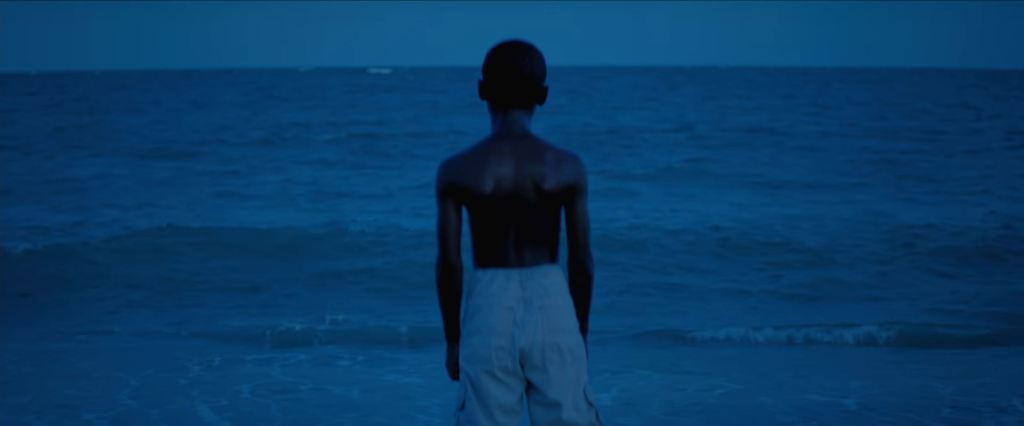
The African/African American infatuation with the sea is explored through art as a search for identity. It was previously understood that ‘Alkebulan’ was the original name for Africa, this idea was popularised by Dr. Cheikh Anta Diop, a pre-colonial historian and anthropologist. Ironically, this was a false claim, as suggested by the Arabic etymology of the title, additionally there was no such thing as an ‘African’ language. Diop’s work was adopted by Afro-centrists but also viewed as pseudo-historic, his critiques claimed he abandoned historic realism for the hope of African unity. However, this idea is almost derogatory to African communities as it diminished their individualism. The reason for this word being chosen was because it translated to “Mother of Earth.” This gravitates to one of the great losses of the slave trade, aside from lives, capital, and culture: the loss of names and languages proves to be another terrible injustice. The image of a young black boy looking out to the sea could thus translate to a boy looking out to a history which has been lost. For a film which focuses so much on identity, the metaphor of looking out to the sea feels intrinsic to protagonist ‘Chiron’ trying to find himself in the endless blue of the ocean.
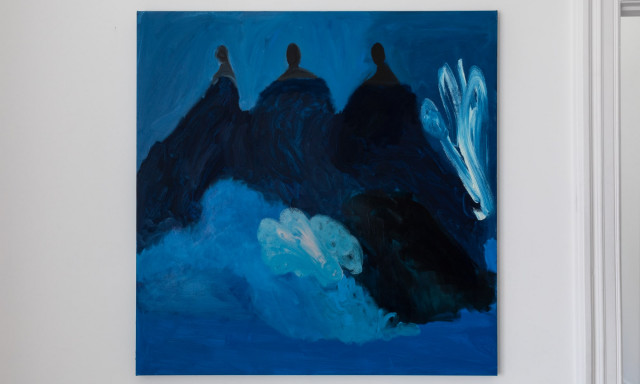
As a companion to black boyhood the artist Ruth Ige transports the colour blue to a more feminine archetype. Ige, a Nigerian born artist currently based in New Zealand was awarded the Rydal prize for her work in the solo exhibition ‘The poetic notion of blue: A Haven’ (2025) For Ige, the colour blue is more cultural than symbolic, representing the Indigo Yoruba fabrics of tribal uniform back home in Nigeria. Therefore, the use of a deep indigo acrylic on canvas calls to the indigo ink of a cultural history rather than the blue light of an African American present. But this divide isn’t necessarily guided by gender; instead, it reflects the nuances of the African experience. Both artworks attempt to communicate a story of connection, both act as a method of reaching out to one’s previous life, or home. Instead, the clear divide is that one’s home is alien and out of reach (‘Moonlight’) whilst the other’s is familiar to the artist (Ige’s work).
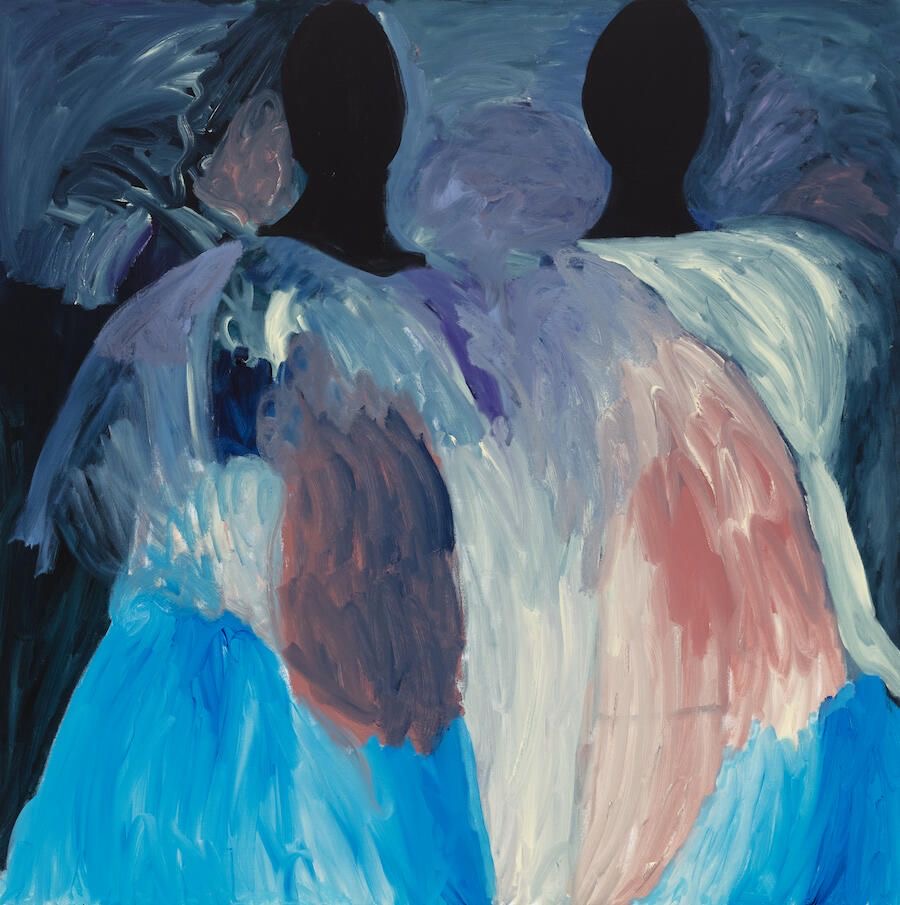
The forms of Ige’s paintings hold the same weightlessness as the protagonists of ‘Moonlight’ however they are presented as more abstract. For example, in ‘Visitors’ (2024) (which was featured among numerous African artworks in this year’s London Frieze), the canvas is overwhelmed by a blue which destabilises both the figures and the background with its large, hurried brushstrokes. They resemble both waves and wind synthesising the portrait with an invisible seascape and unattainable sky.
Much like in ‘Moonlight’ the black figures are also blue, the shade is an opaque black, the colour of a midnight ocean. This allows for both their dehumanisation and ambiguity. The viewer is given permission to impose an identity onto the ‘Visitors.’ Ige’s figures appeared liberated from form and identity, through their faceless and almost phantom-like appearance. The figures effectively haunt the viewer, though their facial expressions and identities are removed, their simple shape looks onwards, towards us. They beg a certain stillness which feels peaceful, they are not haunting in the sense of fear and horror, but they remain with the viewer because of their arbitrary softness. Here the black figures are not monsters or victims, but spirits elevated from the constraints of the black experience. This freedom is also reflected in the loud and obtrusive brushstrokes that replicate a freedom from the constraint of body, race and identity.
‘Why make so much of fragmentary blue
In here and there a bird, or butterfly,
Or flower, or wearing-stone, or open eye,
When heaven presents in sheets the solid hue?

Since earth is earth, perhaps, no heaven (as yet) -
Though some savants make earth include the sky;
and blue so far above comes so high,
It only gives our wish for blue a whet’

- Robert Frost - Fragmentary Blue [Harper’s Magazine - July 1920]
Blue being a colour of the natural world is uplifting, not melancholic. The natural world exists outside the social structure imposed by humanity; blue exists in the oceans and skies without limitations or expectations. Its inclusion in painting and film lifts its figures to a higher nature enabling the escape of the viewer, subject and artist.
The cover image is from: https://teuru.org.nz/products/ruth-ige-winner-of-the-2025-rydal-art-prize?srsltid=AfmBOortHYuZUPBiwVJ0lRaGiE3dA5s-KoTAy1HM-mj3uvekV_deXZng
 Paper Galleries
Leave a comment